How to Get a Drift Phonk Vocal Sound in FL Studio
A drift phonk vocal in FL Studio is built from four moves: a saturated, mid-forward tone stamped with Fruity Soft Clipper or Soundgoodizer, a narrow high-pass around 180-220 Hz that makes room for the slowed 808 and cowbell, a long cavernous reverb tail using Fruity Reeverb 2 at 60-80% wet, and a tape-style lo-fi hit from Fruity Bloom or Edison re-import. Tempo sits between 140-160 BPM halftimed, and the vocal has to punch through a wall of saturated low mids without turning into ear fatigue.
Drift phonk leans on the processing more than the performance, so the chain matters. Think DVRST "Close Eyes", Kordhell "Murder in My Mind", and Kaito Shoma "Vampire" — all three share that same drowned, tape-hissed, but aggressive vocal pocket.
A drift phonk starter preset for FL Studio skips hours of tweaking distortion stages and reverb tails when you just want the lead to sit in the mix tonight.
Shop FL Studio PresetsThe Drift Phonk Vocal Character Defined
The defining trait is cavernous, saturated decay. The vocal is not really "wet" in a polished reverb sense — it is drowned. You hear the words, but the tail swallows them into tape-slowed space. The top end is rolled off around 8-10 kHz, the low mids are thickened with gentle saturation, and the whole thing is usually 20-40% wet on the send, not 10%.
Compare that to regular phonk (more forward, less reverb, more Memphis-era grit) and you can hear the drift-specific choices: longer tails, darker top, heavier saturation, and halftime delivery that lets the reverb actually develop between syllables.
FL Studio Chain Order on the Vocal Insert
Slot 1: Fruity Parametric EQ 2. High-pass at 180 Hz, low-shelf cut of -2 dB around 300 Hz to kill honk, dip -3 dB at 2.8 kHz to tame sibilance before compression, and a gentle -2 dB shelf above 8 kHz to darken the top.
Slot 2: Fruity Compressor or Fruity Limiter in Comp mode. Ratio 3:1, attack 10 ms, release 80 ms, threshold set for 4-6 dB of gain reduction on the loud syllables. You want control, not pumping.
Slot 3: Soundgoodizer on preset B, Amount 25-35%. This is the drift-specific stage — it adds the warm, slightly distorted midrange that makes the vocal feel "on tape".
Slot 4: Fruity Soft Clipper at roughly -2 dB threshold. Subtle clip stage that catches transient spikes without softening the whole signal.
Slot 5: Fruity Fast Dist set to Mode A, Pre-Amp around 15%, Threshold -1.5 dB. This is the aggressive sand layer. Bypass it and you will hear how much character it adds.
Why the Order Matters More Than the Individual Plugin
Drift phonk vocals fall apart when distortion comes before basic cleanup. If you distort the full unfiltered vocal, the low-mid room tone and mouth noise get exaggerated before you ever have a chance to shape them. That is why the high-pass and low-mid cleanup happen first. The chain should distort the intentional vocal tone, not the noise around the performance.
The compressor also belongs before the heavier character stage in most FL Studio drift chains. Compression gives the distortion a more even signal to grab. If you distort first and compress later, the compressor reacts to harsh peaks and can make the vocal pump against the beat. If you compress first, the distortion adds a more controlled layer of grit that feels like tone instead of damage.
The final clipper is not there to make the vocal louder. It catches spikes caused by the distortion and keeps the vocal from punching random holes through the reverb send. Set Fruity Soft Clipper so it works only on the loudest syllables. If it is working all the time, the vocal will flatten and the drift effect will feel smaller, not bigger.
The Send Bus That Makes It Drift
Create an FX send labelled "Drift Verb". Load Fruity Reeverb 2. Decay 4.5-6 seconds, Size around 85%, Diffusion 75%, High Cut at 6 kHz so the tail is dark, Low Cut at 250 Hz so the tail does not muddy the 808. Send the vocal to this bus at roughly -8 to -12 dB — that is 25-35% wet in practice, much more than a pop mix would use.
On the same send, follow the reverb with Fruity Filter or Patcher-hosted EQ and pull another -3 dB at 3 kHz to keep the tail from competing with the dry vocal. For extra drift, add Fruity Delay 3 after the reverb with a 1/4 time, 45% feedback, fully wet, to create that washed-out tail-behind-the-tail effect.
Build the Drift Reverb as a Dark Return, Not a Bright Cloud
Fruity Reeverb 2 can get huge very quickly, but the drift tone is not just "more reverb." It is a dark, filtered return that leaves the vocal readable while the tail fills the empty space between phrases. Use the low cut before the reverb or directly inside the return to keep anything below 250 Hz from feeding the decay. Then use the high cut to make the tail feel aged instead of glossy.
A good return starts with Dry at zero, Wet at 100%, Decay around 4.5 seconds, Size around 80-90%, and High Cut around 5-7 kHz. Then place Fruity Parametric EQ 2 after Reeverb 2 and cut 2-4 dB around 2.5-4 kHz if the tail is stepping on the dry vocal. This is the same reason reverb guides usually recommend treating reverb on an aux: the return needs its own tone, level, and automation.
Automate the send into the reverb, not the reverb plugin itself. Push the send on the last word of a phrase, then pull it back when the next vocal line starts. That lets the vocal explode into space without drowning every word. This kind of send automation is the difference between a controlled drift vocal and a wet vocal that simply sounds unfinished.
The Halftime Pocket and BPM Math
Drift phonk sessions almost always project-tempo at 140-160 BPM with vocals delivered halftime (effectively 70-80 BPM feel). That matters for two reasons: reverb tails at 4-6 seconds read as long in normal trap but read correctly in a halftime pocket, and delay times should be set against the halftime feel — a 1/4 delay at 150 BPM is 400 ms, which is what sits right when syllables are spaced at halftime.
Set your FL Studio project to the actual tempo, not the halftime feel, and let the delay plugin's tempo sync do the math.
Lo-Fi Finish With Fruity Bloom and Edison
After the main chain, bounce the vocal bus through Edison and re-import as audio. This lets you layer Fruity Bloom or a tape simulator over the printed take for hiss, flutter, and subtle pitch drift that you cannot easily automate in real time. Set Bloom wet around 8-15%, not more, or the vocal will start fighting the bass for mid headroom.
If you are running it live without the print-and-reimport move, Fruity Notebook plus Fruity Flanger on very slow, very low-depth settings will ghost a similar wobble onto the signal.
How to Keep Cowbells, 808s, and Vocals From Masking Each Other
Drift phonk arrangements are crowded in a strange way: the vocal is dark, the 808 is huge, and the cowbell often owns the bright rhythmic space. If you brighten the vocal too much, it fights the cowbell. If you leave too much low-mid in the vocal and reverb, it fights the 808. The preset has to leave room for both.
Use this simple split: the vocal body lives mostly from 220 Hz to 1.5 kHz, the vocal bite lives around 2-4 kHz, the cowbell owns the sharp upper-mid attack, and the 808 owns everything below the vocal high-pass. If the vocal disappears, add density around 700 Hz to 1.2 kHz before adding top-end. If the cowbell starts feeling painful, do not darken the whole master. Pull 1-2 dB around the cowbell's sharpest band or move the vocal's presence lift slightly lower.
The reverb return needs the same treatment. High-pass it, low-pass it, and make sure it does not have a resonant peak sitting right where the cowbell is hitting. A filtered tail can be very loud emotionally while still staying quiet in the actual frequency ranges the beat needs.
Mistake to Avoid: Reverb Without Low-Cut
The single biggest drift phonk mistake is sending the full-range vocal to a long reverb without low-cutting the send. The 150-300 Hz range piles up in the tail and now the 808 and the vocal reverb are fighting for the same pocket. Result: muddy, unreadable mix, no drift impact. Always high-pass the send at 200-300 Hz before it hits the reverb. If you want the FL Studio chain already routed before you customize the effect depth, start from the FL Studio vocal presets collection and then adjust the send levels for the actual beat.
Track Calibration Points
DVRST "Close Eyes" — long tail, very dark top, moderate saturation. Kordhell "Murder in My Mind" — more aggressive clip stage, shorter tail, heavier midrange bite. Kaito Shoma "Vampire" — more tape character, more wobble, lower reverb ratio. Reference one of these as a static A/B target in FL Studio Mixer's file player. If your version sounds thinner or brighter than all three, you have not committed enough to the dark-top move.
When to Stray From the Drift Template
If the song is a drift phonk/rage hybrid, cut the reverb send to 15-20% wet and let the distortion do more of the work. If it is a pure atmospheric drift instrumental, push the wet to 40% but tighten the reverb size to 70% so it does not smear past the kick. The template is a starting point, not a law. If the recording itself needs cleanup before the preset can work, mixing services are the better next move than adding more distortion.
How to Record the Vocal So the Chain Works
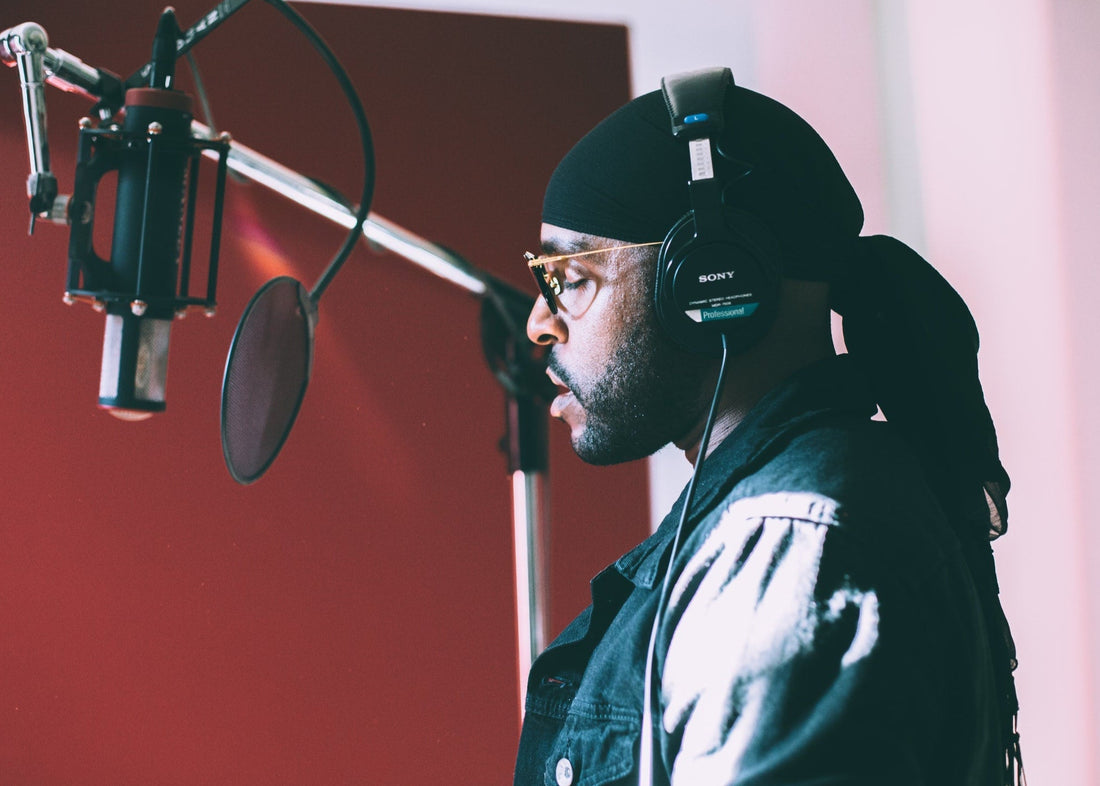
The drift chain cannot save a vocal that was recorded with clipping, heavy room echo, or a noisy fan in the background. Because the style uses long reverb and distortion, every recording problem gets exaggerated. Record closer to the mic than you would for a clean pop vocal, use a pop filter, and leave enough input headroom that the loudest line does not hit the top of the waveform. A clean, slightly dry take gives the chain room to create the damaged sound on purpose.
Do not record with the long drift reverb printed into the vocal unless it is a deliberate sound-design choice. Monitor with the reverb if it helps the performance, but capture the dry vocal separately. That lets you change the reverb time, filter, and send automation after the beat is arranged. If the reverb is printed too loud, the mix has no way to clear space for the 808 later.
The best source tone is dry, close, and a little understated. The chain will add darkness, grit, and size. If the raw vocal is already distorted, roomy, and loud, the chain has nowhere to go. Print clean, process aggressively, and keep enough headroom for the final master.
If you record multiple phonk styles, keep a cleaner general chain saved separately from the drift chain. The broader vocal presets collection can cover cleaner rap and melodic ideas, while the FL Studio drift chain should stay darker, wetter, and more deliberately damaged. Separating those starting points keeps you from forcing every vocal into the same washed-out tone.
That separation also makes revisions easier because you can tell whether the song needs a drift effect or a cleaner vocal identity.
A/B the Vocal in Three Listening Modes
Do not approve a drift phonk vocal from headphones alone. Headphones exaggerate the emotional size of reverb and stereo movement, so a vocal can feel huge there while disappearing on speakers. Check the chain in three listening modes before you print it.
- Mono phone speaker: confirms the lyric still reads after the reverb and distortion collapse.
- Car or bass-heavy speaker: confirms the 808 is not swallowing the vocal return.
- Headphones: confirms the tail and stereo width feel exciting without making the center vocal vanish.
If it works on the phone but feels boring in headphones, add width to the return. If it works in headphones but fails on the phone, bring the dry vocal up or reduce the reverb send. If it works in both but fails in the car, filter the return higher and check the 200-400 Hz buildup.
FL Studio Stock Preset Starting Points
Use these as practical FL Studio starting points, then adjust by the actual voice:
| Goal | FL Studio move | Starting point |
|---|---|---|
| Dark vocal tone | Fruity Parametric EQ 2 | HPF 180 Hz, small shelf down above 8 kHz |
| Stable level | Fruity Limiter Comp mode | 3:1, 10 ms attack, 80 ms release, 4-6 dB GR |
| Warm grit | Soundgoodizer | Preset B, 25-35% |
| Controlled spikes | Fruity Soft Clipper | Threshold just below loudest peaks |
| Dirty edge | Fruity Fast Dist | Low preamp, blend until grit appears then back off |
| Cavernous depth | Fruity Reeverb 2 send | 4.5-6 s decay, low cut 250 Hz, high cut 6 kHz |
The goal is not to max out every stock plugin. The goal is to create one strong dark vocal lane, then let the send bus create the oversized drift environment around it.
Automation Moves That Make the Sound Feel Finished
Once the basic chain is working, the track still needs movement. Drift phonk can feel flat when the vocal stays at one static wet level for the entire song. The better approach is to automate the effect sends by phrase. Keep the verse words slightly drier so the listener catches the hook, then push the last word of each phrase into the reverb and delay returns. That creates the sense that the vocal is falling back into the beat without sacrificing the front of the line.
Try three simple automation moves. First, raise the reverb send 2-4 dB on the final word before a drop. Second, mute the delay return for the first half of a fast phrase so the words do not stack into noise. Third, automate the high cut on the reverb return slightly lower during the densest 808 sections. These moves are small, but they make the chain feel intentional rather than pasted onto every line.
Automation also keeps the preset usable on different voices. A low male vocal may need less reverb high cut and more midrange density. A higher vocal may need the return darker and the distortion lighter. Instead of rebuilding the whole chain, use automation to adjust how much of the same chain shows up in each section.
Final Print Checklist for Drift Phonk Vocals
Before uploading or sending the session out, print the vocal only after it passes a short checklist:
- The dry word is still readable when the beat is loud.
- The reverb return is high-passed enough that the 808 remains clean.
- The cowbell does not fight the vocal's harshness band.
- The distortion adds grit without making every consonant scratchy.
- The clipper catches peaks but does not flatten the whole performance.
- The phone-speaker mono check still reveals the hook.
- The vocal feels darker than a pop vocal but not buried under the beat.
If the vocal fails one of those checks, fix that specific issue instead of adding another plugin. Drift phonk is already a processed sound. More processing is rarely the answer if the filter, send level, or dry vocal balance is wrong.
FAQ
Do I need paid plugins to get a drift phonk vocal in FL Studio?
No. The entire chain above uses FL Studio stock plugins — Parametric EQ 2, Fruity Compressor, Soundgoodizer, Soft Clipper, Fast Dist, Reeverb 2, and Delay 3. Paid options like FabFilter Saturn or Valhalla VintageVerb will sound smoother, but they are not required for a convincing drift tone.
How much reverb is too much for a drift phonk vocal?
Past 45% wet on the send, intelligibility collapses and the lead turns into a texture. The drift sound sits around 25-35% wet with a long, dark tail. If the words start disappearing, pull the send down 3-6 dB before you shorten the decay.
Should I autotune before or after the saturation stage?
Before. Tune the dry vocal first using Newtone or a Pitcher instance early in the chain. Saturation and clipping after tuning keep the pitch artifacts from being amplified. Tuning a saturated signal introduces unwanted digital crunch.
What BPM should a drift phonk vocal sit in?
The project tempo is usually 140-160 BPM with halftime delivery, so the vocal feels like 70-80 BPM. Set FL Studio to the actual tempo and let sync-locked effects (delay, tremolo) do the math against the fast grid.
Why does my drift vocal sound thin even with all the processing?
Almost always a low-mid problem. Check that your high-pass is not too aggressive (180 Hz is the floor, not 250 Hz) and that the saturation stage is actually adding mid body, not just top-end distortion. Soundgoodizer preset B and a Soft Clipper paired together is the fix for thin drift vocals.
Should the drift phonk vocal be louder than the cowbell?
The dry vocal should be readable, but the cowbell can still feel louder rhythmically. If the vocal has to overpower the cowbell to be understood, the vocal is probably too wet or too dark. Bring up the dry center, filter the reverb return, and leave the cowbell to own the sharp rhythmic attack.