How to Get GloRilla Style Vocals in FL Studio or BandLab
A GloRilla-style vocal in FL Studio or BandLab should feel loud, dry, forward, and sharply articulated without turning brittle. Start with a clean aggressive take, high-pass only the rumble, compress for 4-6 dB of control, add a clear 3-5 kHz presence push, keep reverb short, and treat ad-libs on a separate bus so the lead stays in the center of the beat.
The real challenge is not reproducing the chain — it is recording a take that can handle it. GloRilla's delivery is loud, articulated, and consonant-forward. A quiet, mumbled take will not respond to this chain at all.
If you want a chain already tuned for hard female rap delivery with the bite and presence that fits Memphis-style beats, the right preset skips the trial-and-error.
Shop FL Studio PresetsSignal Chain Order in FL Studio
Use this plugin order on the vocal mixer track. Changing the order changes the sound significantly — the compressor before the EQ sounds thinner, the saturation before the EQ muffles the bite.
- Fruity Parametric EQ 2 — high-pass, broad cut at 250 Hz, narrow dip at 3 kHz only if needed
- Fruity Compressor — the tightening stage, main dynamic work
- Fruity Parametric EQ 2 (second instance) — the bite stage, presence and air adjustments
- Fruity Soft Clipper or MSaturator — harmonic density without fizz
- Fruity Multiband Compressor — de-essing only, single band 6-8 kHz
- Send to reverb bus — Fruity Reeverb 2 on an FX track, not as insert
Parameter Settings That Define the Sound
Stage 1 — Subtractive EQ
High-pass filter at 95 Hz, 24 dB/octave. Broad 2 dB cut at 250 Hz with Q around 1.0 to clear the chest mud. Leave a small 1-2 dB cut at 3 kHz ready in case the take is already harsh — bypass it if not.
Stage 2 — Fruity Compressor
Threshold set so you see 4-5 dB of reduction on the loudest bars. Ratio 4:1. Attack 5-8 ms — fast enough to catch transients, slow enough to let the consonant through. Release 80-120 ms. Knee at 5 dB for a smoother ride. This is the tight rap-vocal compression that keeps the energy consistent without pumping.
Stage 3 — Presence and Air EQ
This is where the GloRilla bite lives. A 3-4 dB boost at 4 kHz with Q around 1.2 to push the consonants forward. A 2 dB shelf boost at 10 kHz for air. A small 1.5 dB cut at 800 Hz if the vocal sounds boxy after the compressor.
Stage 4 — Soft Clipper
Fruity Soft Clipper (or MSaturator in Warm mode) with input drive pushed 3-4 dB, output trimmed back to match unity. You should hear harmonics thicken, not distortion. If you hear fizz, back the drive off until it disappears.
Stage 5 — De-Essing
Fruity Multiband Compressor with only the high band active. Crossover at 6 kHz, threshold set to catch the worst esses at 3 dB reduction. Do not over-de-ess — GloRilla's S sounds are part of the delivery.
Send — Fruity Reeverb 2
Room size small, decay 0.7 seconds, pre-delay 15 ms, high cut at 7 kHz, low cut at 200 Hz. Send fader at -18 dB. Lead vocal stays mostly dry. Ad-libs get a second send to a 1.4 second plate at -12 dB.
DAW-Specific Steps for BandLab
BandLab's stock toolset handles this sound with a slightly different chain order because the plugin options are more limited.
- Studio Rack — EQ module: high-pass at 95 Hz, 2 dB cut at 250 Hz, 3 dB boost at 4 kHz, 2 dB shelf at 10 kHz
- Compressor module: "Vocal Tighten" style preset adjusted to 4:1 ratio and 4-5 dB reduction
- De-Esser module: target 6 kHz, 3 dB max reduction
- Saturation module: "Warm Drive" at low setting — less control than FL, so keep it subtle
- Reverb module: "Small Room" preset, adjust decay to 0.8 seconds, high cut at 7 kHz, mix at 12-15 percent
BandLab's de-esser is less surgical than Fruity Multiband, so expect slightly more over-de-essing artifacts. Compensate by boosting 10 kHz more on the EQ to restore the air you lose.
The Most Common Mistake
Home producers chasing this sound almost always over-compress. They see "hard rap vocal" and push reduction to 8-10 dB, killing the dynamic punch of the delivery. GloRilla's vocal sounds loud because the delivery is loud, not because the compressor is smashing it. Keep reduction at 4-5 dB and let the performance do the rest.
The second most common mistake is adding too much reverb. Memphis rap vocals stay forward in the mix — anything over 0.9 seconds of decay on the lead pushes the vocal into a different subgenre entirely.
Recording to Match the Chain
The chain assumes a take captured with:
- Dynamic mic (Shure SM7B, Shure SM58) or a forgiving condenser (AT2035, AKG P220) at 4-6 inches
- Input gain hitting -6 to -8 dBFS on the loudest bars, not -3 or louder
- Clear consonant articulation — "th," "k," and "t" sounds cut through
- No back-of-the-throat mumbling, even on verse 2 fatigue
If your take is quiet or mumbled, no chain will fix it. Re-record rather than process your way out of a weak performance.
Ad-Libs: Different Chain, Different Placement
Ad-libs should go on a separate mixer track with the same lead chain duplicated, then two differences: the reverb send goes to the longer plate instead of the short room, and the compressor reduction goes up to 6-7 dB to flatten the variation between screamed and spoken ad-libs. Pan ad-libs 40-60 percent wide in matched stereo pairs, never straight center.
For more on balancing lead and ad-lib stacking in dense rap mixes, the guide on getting a West Coast rap vocal sound in FL Studio gives another dry, forward chain you can compare against this more aggressive Memphis-style approach.
Settings Cheat Sheet
- High-pass: 95 Hz
- Presence boost: +3-4 dB at 4 kHz
- Air shelf: +2 dB at 10 kHz
- Compressor reduction: 4-5 dB, 4:1 ratio
- Saturation drive: 3-4 dB of harmonic thickening
- Reverb decay: 0.7 sec for lead, 1.4 sec for ad-libs
If you are building this chain across multiple songs, stock plugins vs paid vocal plugins for rap explains when the stock FL Studio route is enough and when a finished preset chain can save time.
Why the Performance Comes Before the Preset
The biggest mistake with this vocal style is treating the chain like it creates the attitude. It does not. The chain only reveals what is already in the take. If the rapper is quiet, far from the mic, swallowing consonants, or leaning away on the loudest words, the compressor will bring up room noise and the EQ boost will make the weak parts sharper. That creates a small, harsh vocal instead of a confident one.
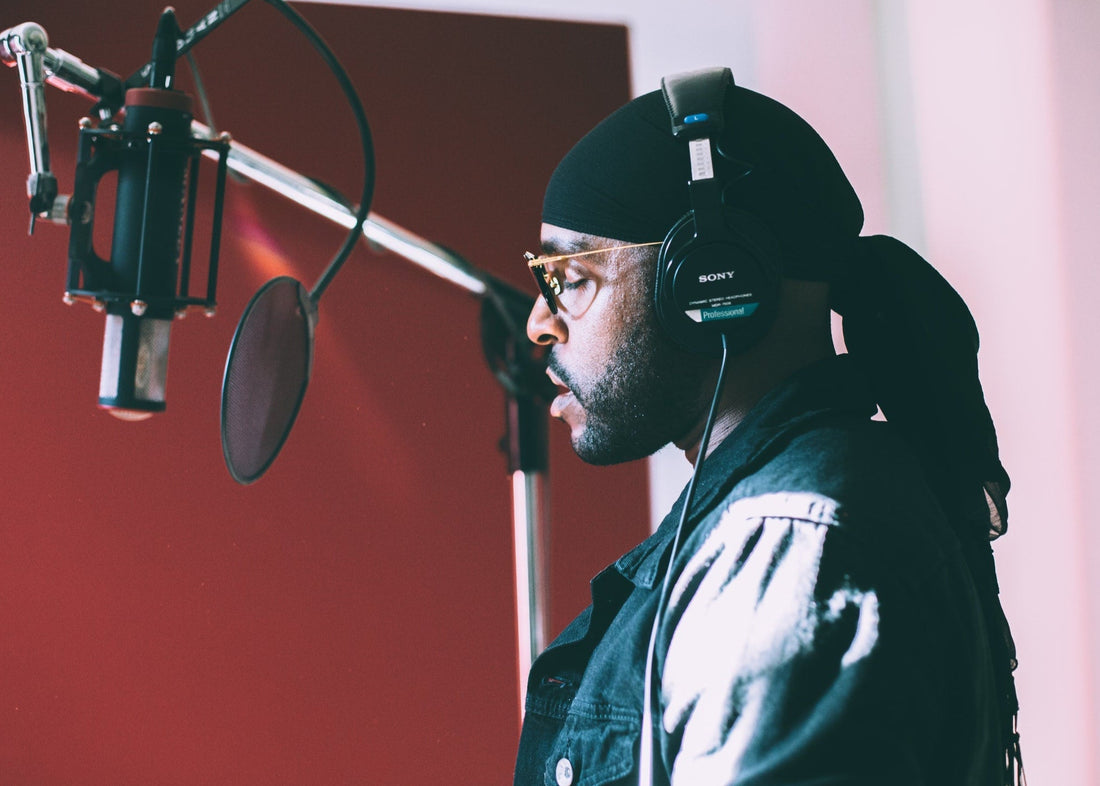
Record the vocal like it needs to win the center of the beat before mixing starts. The delivery should be close enough to sound direct but not so close that every plosive slams the capsule. Four to six inches from the mic is a strong starting point for a dynamic mic. For a condenser, six to eight inches is often safer because the mic captures more top end and room detail. The goal is a controlled loud take, not a clipped one. Peaks around -8 dBFS to -6 dBFS are enough. If the recording hits red, the final chain will exaggerate the damage.
Breath control also matters. A sharp rap vocal can still sound clean when breaths are intentional. It starts sounding messy when every punch-in has a different air level. Before editing, listen through the lead and mark breaths that feel distracting. Do not delete every breath. Lower the loud ones by a few dB so the vocal still feels human but does not jump forward between lines.
How to Build the Lead Around Midrange Authority
This style lives in the midrange. A lot of home producers try to make aggressive rap vocals louder by boosting air at 10 kHz and driving saturation harder. That can work for airy melodic vocals, but it usually makes a GloRilla-style lead thin. The power comes from the 150 Hz to 500 Hz body being controlled, not erased, and the 3 kHz to 5 kHz range being pushed enough for words to cut through the snare.
Start with subtractive EQ only where the recording needs it. If the vocal has room boom, cut around 180 Hz to 300 Hz. If the vocal is nasal, check 800 Hz to 1.2 kHz. If the consonants already hurt, do not blindly boost 4 kHz; use a smaller boost or move it lower. The settings above are a direction, not a law. The best version of this chain changes slightly depending on mic, voice, room, and beat brightness.
Compression should make the lead feel closer, not flatter. If the vocal loses punch after compression, slow the attack slightly. If syllables jump out unevenly, lower the threshold or use a second light compressor after EQ instead of forcing one compressor to do everything. A two-stage approach can be cleaner: one compressor catching peaks for 2-3 dB, then another leveling the body for another 2-3 dB.
How to Keep the Chain From Becoming Harsh
A forward rap vocal can become painful fast because the same frequencies that create intelligibility can also create fatigue. When the vocal sounds exciting for 10 seconds but annoying for a full song, the problem is usually uncontrolled upper mids. Check the lead against the hook, not just the first verse. Hooks often have doubles, ad-libs, and extra energy, so the harshness builds there first.
Use de-essing after the presence boost, not before, if the boost is creating the sharpness. A de-esser before the boost may look like it is working, but the second EQ can bring the esses back. In FL Studio, a multiband compressor set only on the high band is usually enough. In BandLab, use the de-esser conservatively and avoid crushing every S sound. The vocal should still have edge. You are controlling spikes, not sanding off the whole performance.
Saturation should be felt more than heard. If the vocal starts sounding fuzzy in solo, it will usually sound worse in the full mix once the hi-hats and snare return. Drive the clipper until the vocal gains density, then level-match the output and bypass it. If bypassed sounds cleaner but smaller, you are close. If bypassed sounds obviously better, the saturation is doing too much.
BandLab Limitations and How to Work Around Them
BandLab can get close to this sound, but it gives you fewer surgical controls than FL Studio. That means the recording has to be cleaner. Use less reverb than you think you need, keep the compressor from pumping, and be careful with presets that add delay or stereo widening automatically. A dry vocal can sound awkward in solo, but it often sits better once the beat is playing.
If BandLab's reverb feels too wide or glossy, lower the wet mix and shorten the decay before changing EQ. Reverb is one of the fastest ways to make this style feel less direct. If the vocal needs space, use a short room or a quiet slap delay instead of a long plate. Ad-libs can take more space because they are not carrying the main lyric. The lead should feel like it is right in front of the listener.
For artists who move between phone demos and full FL Studio sessions, keep the same intent across both DAWs: close lead, tight compression, controlled upper mids, short ambience, and separate ad-lib treatment. The exact plugin names matter less than those decisions. If the track is going from preset demo to finished release, should you pay for mixing if you already have good presets explains when a preset chain is enough and when a mix engineer can push the vocal further.
How to Mix the Vocal Against the Beat
A GloRilla-style vocal needs to sit on top of the beat without sounding pasted on. That balance is mostly about midrange control. If the beat has a busy snare, bright hi-hats, and a loud synth lead, the vocal's 3-5 kHz area can fight for space. Before boosting the vocal more, lower or carve the beat slightly around the vocal pocket. A small dip in the instrumental can sound more natural than another aggressive vocal boost.
Start with the lead vocal at a level where every word is clear at normal listening volume. Then bring the beat up until it feels energetic without covering the consonants. If the vocal disappears when the 808 enters, the issue may be low-mid masking, not volume. Try a small cut around 200 Hz to 350 Hz on the vocal if it feels cloudy, or a small cut in the beat if the instrumental is crowding the voice. Do not solve every masking problem by pushing the lead fader louder. That makes the vocal feel detached.
The snare relationship is important. Aggressive rap vocals often share space with the snare crack. If the vocal and snare both hit hard at the same frequency, the mix becomes sharp. You can let the snare own the first transient and let the vocal own the sustained presence, or you can soften the snare slightly during dense vocal sections. Automation is often cleaner than static EQ because the conflict may only happen during hooks or fast lines.
Automation Makes the Chain Sound More Expensive
Preset settings get the vocal close, but automation makes the chain feel finished. Ride the lead vocal into the hook by half a dB if the beat gets bigger. Pull down a shout that jumps out instead of relying on the compressor to catch it. Lift the end of a bar if the last word loses energy. These tiny moves are what separate a usable preset mix from a vocal that feels intentionally placed.
Automation also helps ad-libs. Instead of setting one ad-lib level for the whole song, treat call-and-response ad-libs differently from background hype layers. A response ad-lib after a punchline may need to be loud and clear. A texture ad-lib behind the hook should be lower and wider. If every ad-lib is the same level, the mix becomes distracting. The lead should stay dominant.
Delay throws are another useful automation move. Keep the main lead dry, then send only the last word of selected lines into a short slap or quarter-note delay. This keeps the vocal forward while still adding movement. In FL Studio, automate the send amount to the delay bus. In BandLab, duplicate the word to an effect track if the automation options feel limited. The principle is the same: effect moments should support the delivery, not wash over every line.
How to Know the Chain Is Working
The chain is working when the vocal still sounds aggressive at lower volume. If you have to play the mix loud for the vocal to feel powerful, the midrange balance probably is not right. Lower the playback volume and ask whether the lead still carries the attitude. A good dry rap vocal should feel confident even when the speakers are quiet.
It should also translate to phone speakers without turning scratchy. Phone speakers exaggerate upper mids and remove low-end weight, so they reveal harshness quickly. If the vocal becomes painful on a phone, reduce the presence boost slightly or use dynamic control around the harsh band. If the vocal becomes too small on a phone, you may have cut too much body or pushed the high-pass too high.
Finally, compare the lead against the ad-libs. The lead should sound closest and most centered. The ad-libs should feel like energy around it. If the ad-libs are more exciting than the lead, lower them, widen them, or darken them. The listener should never have to decide which vocal part is the main one.
When you think the vocal is finished, print a quick rough bounce and listen away from the DAW. The DAW view can trick you into judging the chain instead of the song. On a phone, in the car, or through earbuds, the only question is whether the vocal feels confident and easy to understand. If the answer is yes, stop tweaking. If the vocal only sounds impressive while the plugin window is open, the mix probably needs simpler decisions.
FAQ
Do I need paid plugins for the GloRilla sound in FL Studio?
No. Fruity Parametric EQ 2, Fruity Compressor, Fruity Soft Clipper, Fruity Multiband Compressor, and Fruity Reeverb 2 are all stock. The sound comes from the settings and order, not third-party tools.
Why does my vocal sound thin instead of loud?
Usually the high-pass is set too high. Start at 95 Hz, not 120. A hard female rap voice needs the 100-150 Hz range to carry weight on consumer speakers.
Is the Memphis rap sound different from Atlanta trap?
Yes. Memphis lead vocals are drier and more forward. Atlanta leads often have more reverb tail and heavier stereo spread. If your reference is Playboi Carti, the chain above will be too dry.
Can I use Auto-Tune on a GloRilla-style vocal?
Light tuning, yes. Hard Auto-Tune, no. The style is built on a strong dry performance with pitch correction only on drifted notes, not on real-time retune 0.
Should the ad-lib bus share the lead reverb?
No. Separate returns. The lead stays dry and forward, ad-libs can blur into the beat more. Sharing a single reverb bus flattens that contrast.
Can this chain work for male rap vocals too?
Yes, but the EQ points usually move lower. Male vocals often need less 4 kHz boost and more cleanup around 180-350 Hz. Keep the same dry, forward approach, then adjust the body and bite to the voice.