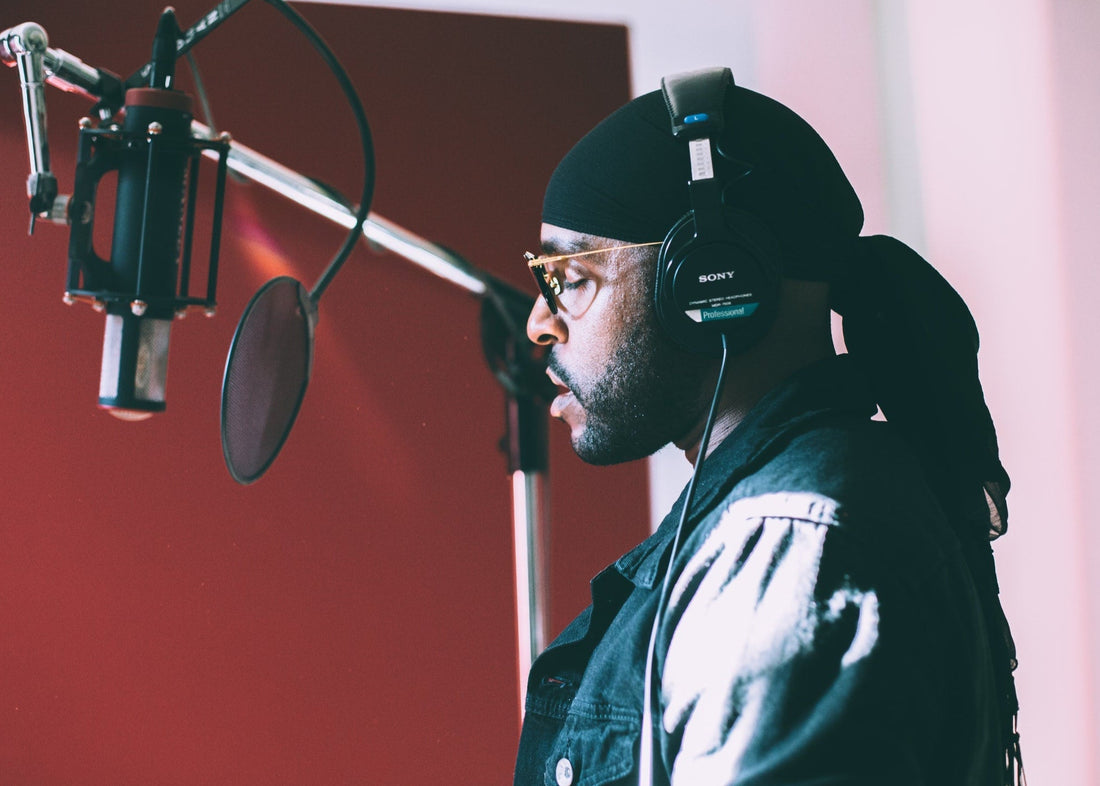
Tems Vocal Chain in FL Studio or BandLab: Warm Afrobeats Depth
A Tems-style vocal chain in FL Studio or BandLab should protect a warm, low-mid-centered lead while adding depth, control, and atmosphere without turning the vocal into bright pop. Start with a close, full recording, use gentle pitch correction that keeps vibrato and slides intact, remove rumble without thinning the chest, compress smoothly, soften harsh presence, add subtle saturation for density, and use a dark plate, hall, or filtered delay behind the vocal. The result should feel intimate, heavy, and floating at the same time.
Tems is not a useful reference if you chase only brightness or heavy tuning. Apple Music currently frames her around Alte and R&B/Soul, with catalog anchors like "Free Mind," "Higher," "Me & U," "Love Me JeJe," and the Born in the Wild album era. From a mixing standpoint, the important takeaway is the vocal center: low, smoky, calm, and emotionally steady, with ambience that creates size without stealing the lyric.
This guide gives you a practical FL Studio and BandLab chain for warm Afrobeats depth. It is not a copy-paste promise. Your voice, mic, room, key, delivery, and instrumental decide the final numbers. Use the settings as a starting map, then adjust until the vocal feels deep without getting muddy.
If you want a faster starting point for warm, deep, modern vocal chains, start with a vocal preset and tune the tone around your own mic and voice.
Shop Vocal PresetsThe Short Answer
To get a Tems-style vocal, build the mix around warmth and depth first. Keep the lead close. Keep tuning light. Use EQ to remove rumble and boxiness while preserving chest. Use compression to hold the vocal steady, not to flatten it. Use reverb and delay as a dark space behind the vocal instead of a shiny effect on top of it.
If your vocal starts sounding like a bright pop chain with the air turned down, you are in the wrong direction. The target is not dull. It is warm, controlled, and spacious. The vocal should feel like it has weight even when the beat is soft.
What the Tems Vocal Sound Is Really Doing
The core sound is a combination of vocal tone, restraint, and space. The voice carries a lot of lower-mid character, so the chain has to preserve that. But the same low mids can become muddy if the recording is too close, the room is untreated, or the reverb is not filtered. That is why this sound is harder than it looks. You are keeping body and removing cloud at the same time.
Think of the chain as five jobs:
- Capture a close, full vocal with low room noise.
- Correct pitch gently while keeping natural movement.
- Clean mud without deleting the voice's weight.
- Control dynamics so quiet phrases do not vanish.
- Add dark ambience that floats behind the lead.
Those jobs matter more than the exact DAW. FL Studio gives you more detailed stock controls. BandLab can still get close if the recording is clean and the effects are kept intentional.
The Chain at a Glance
| Stage | FL Studio option | BandLab option | Goal |
|---|---|---|---|
| Gain and cleanup | Clip gain, Mixer level | Region gain, track level | Consistent vocal before processing |
| Pitch support | NewTone for edits, Pitcher lightly | AutoPitch with correct key and moderate Level | Stable notes without losing vibrato |
| EQ | Fruity Parametric EQ 2 | Stock EQ or Visual EQ | Remove rumble and mud while keeping body |
| Compression | Fruity Limiter in COMP mode | Stock compressor | Smooth phrase level |
| Saturation | Soft clipper or light color stage | Light saturator or warm preset stage | Add density without grit |
| Space | Fruity Reeverb 2 and Fruity Delay 3 sends | Short/dark reverb and filtered delay | Wide depth behind the lead |
Start With a Full, Controlled Recording
A Tems-style vocal will not work if the raw recording is thin. If the dry take already lacks body, EQ cannot invent the same kind of weight without sounding fake. Record close enough to get warmth, but not so close that plosives and proximity boom dominate. A pop filter, consistent distance, and a quiet space matter more than a longer plugin chain.
Listen to the dry vocal before processing. You want a take that feels calm and emotionally certain. It does not need to be loud or aggressive. It needs to be stable. If the singer is whispering from too far away, the compressor will raise room tone. If the singer is too close and boomy, the chain will fight mud the whole time.
Before plugins, check:
- The loudest words do not clip.
- Breaths and pauses do not reveal loud room noise.
- The vocal has chest without uncontrolled boom.
- The performance has emotional weight before effects.
- The singer stays at a consistent mic distance.
If the source is wrong, fix it before reaching for reverb or saturation.
Pitch Correction: Keep the Human Movement
Tems-style tuning should support the line without flattening the personality. The vocal can have pitch support, but the correction should not remove slides, soft attacks, or vibrato. Image-Line's NewTone documentation describes pitch editing with controls for pitch center, variation, transition, vibrato, and formant; that kind of control is useful because this vocal style benefits from selective edits rather than heavy global correction.
In BandLab, the official AutoPitch workflow emphasizes setting the correct key and scale and using the Level knob for intensity. That is the correct mindset here. Key first, then intensity. Do not guess the key and compensate with more tuning.
FL Studio Pitch Workflow
- Use NewTone for phrases that need detailed repair.
- Correct only unstable notes, not every natural movement.
- Keep transitions smooth so note changes do not snap unnaturally.
- Avoid formant shifts unless you are using them as a deliberate effect.
- If using Pitcher, place it early and keep the correction subtle.
BandLab AutoPitch Workflow
- Record the vocal clean before choosing the effect.
- Use AutoKey or identify the key manually.
- Select the correct key and scale in AutoPitch.
- Lower the Level until the vocal still feels natural.
- Re-record any line that only works with extreme correction.
If vibrato starts sounding plastic, the tuning is too heavy. If the emotional slides disappear, the transition or intensity is too aggressive.
EQ: Protect the Chest, Remove the Cloud
The EQ goal is not "dark." The goal is controlled warmth. A Tems-style vocal needs enough low-mid weight to feel deep, but too much low-mid energy will hide the words and make the reverb muddy. Start with small moves and listen in the beat.
| Range | Starter move | Risk |
|---|---|---|
| 70-100 Hz | High-pass rumble and plosives | High-passing too high makes the vocal small |
| 150-250 Hz | Preserve warmth and chest | Boosting too much creates boom |
| 250-450 Hz | Cut boxiness only if the vocal clouds up | Cutting too much removes soul |
| 800 Hz-1.5 kHz | Control nasal buildup if needed | Too much cut makes words less forward |
| 2-4 kHz | Add a small clarity lift only if the lyric hides | Too much turns warm into sharp |
| 8-12 kHz | Keep air controlled and smooth | Too much air breaks the smoky tone |
In FL Studio, Fruity Parametric EQ 2 is enough. In BandLab, use the stock EQ carefully. Do not carve the vocal until it looks flat. This style can keep character. You only remove what fights the lyric or the instrumental.
Compression: Smooth the Phrase, Not the Life
Compression should make the vocal feel steady and close. It should not make every syllable equally loud. Use clip gain before compression. Pull down loud words and raise quiet phrase endings so the compressor reacts musically.
In FL Studio, Fruity Limiter in COMP mode is a practical stock option. Image-Line describes Fruity Limiter as a single-band compressor, limiter, and gate, and the compressor side is enough for this vocal chain. Start around 2:1 to 4:1, use a medium attack, and set the release so the vocal breathes between phrases. Aim for a few dB of gain reduction most of the time.
In BandLab, use a stock compressor with moderate settings. If the vocal starts pumping or the room tone gets louder between lines, the compressor is working too hard. Go back to gain automation and reduce the amount of compression.
Saturation: Add Weight, Not Dirt
Subtle saturation can help a Tems-style vocal feel less sterile. The goal is not audible distortion. It is gentle harmonic density. If the vocal gets gritty, crunchy, or fuzzy, back off. The saturation should be something you feel more than hear.
Use saturation after compression or between compression stages if your chain has more than one dynamics tool. Keep it low. Bypass it often. If bypassing the saturation makes the vocal slightly less full, it is helping. If bypassing it suddenly makes the lyric clearer, it is hurting.
Reverb: Dark, Filtered, and Behind the Lead
The ambience is a major part of the depth. But the reverb should not brighten the vocal or make the lyric distant. Use a plate, hall, or spacious room with the high end filtered down. Image-Line's Reeverb controls include low cut, high cut, predelay, and room size; those are the exact controls to use for this sound. Low cut the return so it does not add mud. High cut the return so it does not add shiny top end. Use predelay so the dry vocal stays readable.
Start here:
- Decay around 1.8 to 2.6 seconds depending on song tempo.
- Predelay around 25 to 40 ms so the words stay clear.
- Low cut around 250-400 Hz on the reverb return.
- High cut around 5-7 kHz so the tail stays dark.
- Lower send level in verses and raise it slightly on hooks.
The reverb should feel like a space behind the singer. If the lead moves backward, reduce send level, shorten decay, or increase predelay.
Delay: Use Movement, Not Clutter
Delay can create the floating quality, but only if it is filtered and controlled. Fruity Delay 3 includes tempo sync, filtering, feedback, stereo, ping-pong, and tone controls, so it is useful for phrase throws and background movement. Keep feedback low. Filter the repeats. Automate the input or send so delay appears at phrase endings instead of repeating through the whole verse.
Try dotted eighth or quarter-note throws, then lower them until they are felt more than heard. In BandLab, use the closest delay option and reduce mix level. A clear, low-feedback repeat is better than a loud echo that competes with the next line.
Doubles, Harmonies, and Background Vocals
Do not over-stack this vocal style. The lead should feel central and spacious. Doubles can work on hooks, but they should be quiet and supportive. Background harmonies should feel like atmosphere, not a wall of vocals.
For doubles, record real takes. Do not just copy the lead and delay it. Pan them moderately, roll off extra low end, reduce brightness, and keep them below the lead. For harmonies, choose a few emotional moments instead of filling every gap. The more layers you add, the more careful you must be with low mids and reverb.
If the hook feels empty, try raising ambience first. Then add a quiet double. If it still feels empty, add one harmony. Do not start with six layers.
How to Fit the Vocal Around Afrobeats Production
Afrobeats and Afro-R&B productions often have percussion, bass movement, keys, guitar, pads, and background texture competing for space. A warm vocal can disappear if the beat is already thick in the low mids. Do not solve that only by brightening the vocal.
Instead, make space in the instrumental. Lower the beat a touch. Carve a small area from keys or pads around the vocal body. Keep percussion transients clear but not painfully sharp. If guitars mask consonants, make a small cut in the guitar bus before adding more upper mids to the vocal.
For a brighter Latin-pop comparison, the Karol G-style vocal guide shows how a more forward vocal can still avoid overprocessing. Tems-style depth usually needs more low-mid protection and darker ambience.
FL Studio Chain Example
- Clip gain the raw vocal so loud words and soft endings are closer together.
- Use NewTone for selected pitch fixes or Pitcher lightly for real-time support.
- Use Fruity Parametric EQ 2 to high-pass rumble and clean mud.
- Use Fruity Limiter in COMP mode for smooth phrase control.
- Add light saturation only if the vocal needs density.
- Add a second EQ only for small tone corrections.
- Send to Fruity Reeverb 2 with dark filtering and predelay.
- Use Fruity Delay 3 for filtered phrase throws, not constant clutter.
BandLab Chain Example
- Record close, clean, and consistent.
- Set AutoPitch to the correct key and scale.
- Keep the AutoPitch Level low to moderate.
- Use stock EQ to keep warmth while removing mud.
- Use stock compression for phrase stability.
- Add light saturation or warmth only if available and useful.
- Use dark reverb and filtered delay at low levels.
- Save the chain as a custom preset once it fits your mic.
If you are deciding whether to build this from scratch or start from a product, the Vocal Preset Buying Guide explains how to check DAW compatibility, plugin requirements, and style fit before buying.
Troubleshooting the Chain
| Problem | Likely cause | Fix |
|---|---|---|
| Vocal sounds muddy | Too much 250-450 Hz or unfiltered reverb | Cut mud gently and low-cut the reverb return |
| Vocal sounds too bright | Air boost, bright mic, or bright reverb tail | Reduce top shelf and high-cut ambience |
| Tuning sounds obvious | Wrong key or too much intensity | Correct the key, lower Level, or edit notes manually |
| Lead feels far away | Too much reverb or not enough predelay | Lower send, shorten decay, or add predelay |
| Hook feels thin | No support layers or too little ambience | Add a quiet real double or automate reverb send |
Final Settings Checklist
- The dry vocal has body before processing.
- Pitch correction keeps vibrato and natural movement.
- Low mids are warm but not cloudy.
- Compression steadies phrases without flattening emotion.
- Saturation adds density without audible grit.
- Reverb is filtered dark and sits behind the lead.
- Delay appears as movement, not constant clutter.
- The vocal stays readable at low volume and on a phone speaker.
Reference the Vocal in Context
Do not judge this chain in solo for too long. A warm vocal can sound too dark by itself and still be perfect in the track. It can also sound impressive in headphones and then disappear once percussion, pads, bass, and guitars return. The reference should always be the vocal inside the instrumental.
Use a short reference loop. Pick one section where the lead is exposed and one section where the hook or groove is fuller. Listen to both at low volume. If the words stay readable in the full section and the vocal still feels intimate in the exposed section, the balance is close. If you can only hear the vocal clearly when it is much louder than the beat, the arrangement or EQ space needs work.
Also check whether you are referencing the right Tems mood. "Free Mind" and "Higher" lean into emotional low-mid weight. "Me & U" and "Love Me JeJe" can feel a little more open and rhythmic. A feature vocal may sit drier than a lead vocal on her own record. Choose the mood before you choose the final reverb amount.
Vocal Bus Treatment
After the lead, doubles, ad-libs, and harmonies work on their own, route them to a vocal bus if your DAW makes that easy. Keep the bus subtle. It should glue the layers, not fix mistakes from the individual tracks.
A simple bus can use light compression, a small EQ move, and shared ambience routing. The compressor should only catch loud hook moments. If it is working constantly, the individual tracks are not balanced yet. A small EQ move can clean shared mud around the low mids, but do not cut so much that the whole vocal stack loses depth. Shared ambience can make the layers feel like they exist in the same world.
BandLab users can approximate this by keeping all vocal layers in the same tonal family and saving a consistent effects preset for doubles and ad-libs. FL Studio users can route vocal inserts to a bus, use send effects, and keep the lead drier than the support layers. The lead should still be the anchor.
How to Make the Vocal Translate
A deep vocal chain needs extra translation checks because warmth can become mud on small speakers and brightness can appear suddenly on headphones. Before you commit, listen on more than one playback system.
- Phone speaker: the melody and words should still be easy to follow.
- Small laptop speakers: the vocal should not vanish when low mids disappear.
- Headphones: the reverb tail should feel smooth, not hissy or distracting.
- Car or Bluetooth speaker: the vocal body should feel warm, not boomy.
- Mono: doubles and delay should not make the lead feel smaller.
If the phone speaker loses the vocal, do not instantly boost 10 kHz. Try a small 2-4 kHz clarity move, level automation, or a cut in the masking instrument. If the car sounds boomy, do not remove all chest. Find the specific buildup and reduce it gently. Translation fixes should be narrow and practical.
When to Use a Preset for This Sound
A preset helps when you want the chain direction quickly: warm EQ, steady compression, subtle pitch support, and filtered ambience. It hurts when you leave it at the default intensity even though your mic or voice needs different treatment. For Tems-style depth, the biggest preset mistake is loading a chain that was designed for bright rap or pop vocals and trying to darken it afterward.
Choose a preset that starts warm and adjustable. Look for a chain where reverb, delay, compression, and tone can be reduced independently. If the preset only sounds good with every effect pushed, it will be hard to place in a real Afrobeats or Afro-R&B mix. A useful preset still sounds balanced when the ambience is pulled back.
After loading any preset, set input level first. Then lower tuning, reduce reverb, and rebalance EQ around your own voice. The preset should shorten the setup process. It should not replace listening.
FAQ
Can I get Tems-style vocals in BandLab?
Yes. Record a clean close vocal, use AutoPitch with the correct key and moderate Level, keep EQ warm but controlled, compress smoothly, and use dark reverb or filtered delay at low levels. The recording quality matters more than having expensive plugins.
What makes a Tems-style vocal sound warm?
The warmth comes from the singer's tone, close recording, preserved low mids, smooth compression, subtle harmonic density, and dark ambience. Do not create warmth by adding mud. Keep body while removing cloudy buildup.
Should I use heavy pitch correction?
No. Use pitch correction gently. The vocal should keep vibrato, slides, and natural phrase movement. If the tuning sounds obvious, lower the intensity, correct only problem notes, or redo the take.
What reverb works best for this sound?
A dark plate, hall, or spacious room works well when it is filtered and tucked behind the lead. Use predelay for clarity, low-cut the return to avoid mud, and high-cut the return so the tail does not get shiny.
Why does my vocal sound muddy?
The common causes are too much low-mid buildup, a recording that is too close and boomy, compression raising room tone, or reverb that has not been filtered. Fix the source and low-mid balance before adding brightness.
Do I need doubles for a Tems-style hook?
Sometimes, but not always. Start with the lead and ambience. If the hook needs more width, add one quiet real double or a few harmony moments. Too many layers can erase the intimate depth of the lead.