How to Record Clean Lead Vocals in a Bedroom With Basic Gear
To record clean lead vocals in a bedroom, choose the quietest part of the room, put the singer close enough to the mic for a strong voice-to-room balance, use closed-back headphones, control plosives with a pop filter, set input gain below clipping, and record a short test before the real take.
You do not need a perfect studio to record a usable lead vocal. You do need to stop the bedroom from becoming louder than the singer. Most bad bedroom vocals are not ruined by the microphone. They are ruined by fan noise, laptop noise, room reflections, headphone bleed, plosives, clipping, and rushed test levels.
This guide is for basic setups: a mic, interface, stand, pop filter, headphones, and a DAW. The goal is a clean vocal that a preset, template, or mixing engineer can actually work with later. If the source is cleaner, every plug-in after it behaves better.
The Short Answer: Win the Source Before the Plug-Ins
A clean bedroom vocal is mostly a source problem. Before opening EQ or compression, make the raw recording usable. That means:
- The room is quiet enough that noise does not jump out between words.
- The mic is close enough to capture more voice than room.
- The pop filter controls bursts from P and B sounds.
- The headphones do not leak the beat into the mic.
- The input gain is high enough for a clear signal but low enough to avoid clipping.
- The singer can hear themselves comfortably while performing.
If those pieces are right, the vocal may still need editing and mixing, but it will not need rescue. That is the difference between a bedroom recording that feels workable and one that fights every preset.
Basic Gear That Is Enough to Start
Do not overcomplicate the gear list. A simple vocal setup can work if every piece is used correctly.
| Gear | What it does | What matters most |
|---|---|---|
| Microphone | Captures the vocal | Cardioid pattern, stable placement, suitable distance |
| Audio interface | Sets preamp gain and converts audio | Clean gain without clipping |
| Closed-back headphones | Lets the singer hear the beat and vocal | Low bleed and comfortable monitoring |
| Pop filter | Reduces plosive bursts | Placed between mouth and mic, not touching the grille |
| Stable stand | Keeps the mic still | No desk bumps, no floor wobble, correct height |
| Soft material | Reduces reflections | Behind and around the singer, not only behind the mic |
Focusrite's vocal recording guidance points to the same practical pieces: closed-back headphones, proper interface gain, a quiet room, soft furnishings, curtains, a pop shield, and a shock mount. None of those are glamorous. They are the details that stop the recording from falling apart before the mix begins.
Pick the Quietest Spot, Not the Coolest-Looking Spot
The best bedroom recording spot is rarely the desk. Desks have computer fans, screens, reflective surfaces, keyboard clicks, and hard corners. A better spot is often near a closet full of clothes, a bed, a curtain, or a wall with heavy blankets.
Stand in the room and listen before setting up. Turn off the beat. Stop moving. Listen for air conditioning, ceiling fan noise, outside traffic, a computer fan, mini-fridge hum, hallway noise, and buzzing chargers. Move the mic away from the loudest source. If the window side of the room is noisy, record away from the window. If the laptop fan is loud, move the laptop off-axis and farther from the microphone.
Record ten seconds of room tone
Before the real vocal, record ten seconds of silence with the mic armed and the room exactly as it will be during the take. Then listen back. If you hear fan noise, a click track, traffic, hum, or hiss, the compressor will hear it too. Fix the loudest source before recording the vocal.
This one habit prevents the most common bedroom mistake: noticing the room problem after the best take has already happened.
Use the Microphone Pattern to Your Advantage
Most beginner vocal mics use a cardioid pickup pattern. A cardioid mic hears more from the front and less from the back. Shure's SM58 guide describes it as a cardioid dynamic vocal mic that isolates the main sound source while minimizing unwanted background noise. That does not mean it rejects everything. It means mic direction matters.
Point the front of the mic at the singer. Point the back of the mic toward the loudest unwanted source when possible. If the laptop is noisy, do not put it directly in front of the mic. If the room has a hard wall behind the singer, cover that wall or turn the setup so the reflection is less direct.
Dynamic vs condenser in a bedroom
A dynamic mic can be useful in a noisy room because it often captures less room detail when used close. A condenser can sound more detailed, but it may also capture more of the room, computer, and street. Neither is automatically better. The cleaner choice is the mic that gives you more voice than room in your actual space.
If you already own a mic, learn the room and placement before buying another one. A better mic in a bad position still records a bad position.
Set the Distance Before You Set the Gain
Mic distance changes tone, room level, plosives, and input gain all at once. Start with the singer close enough that the voice is clearly stronger than the room, but not so close that every P, B, and breath blast overloads the capsule.
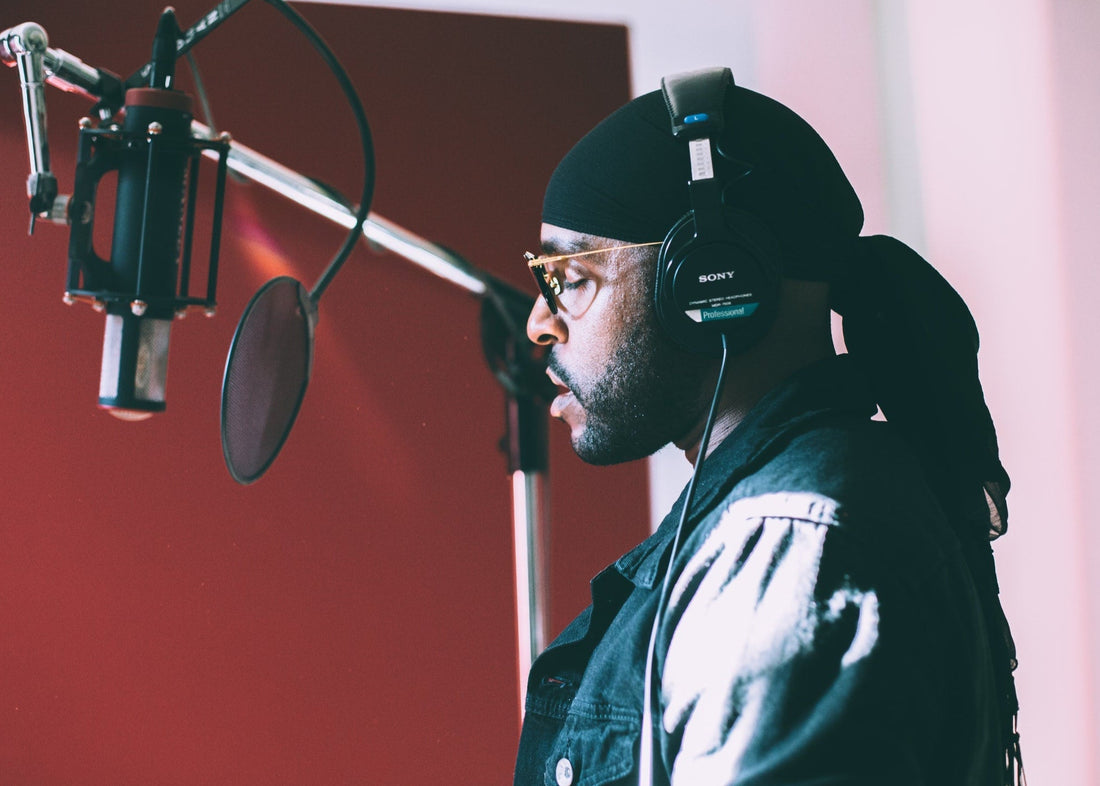
A practical starting point is a hand-width from the pop filter, with the pop filter a few inches from the mic. Angle the mic slightly so the singer is not blasting air directly into the center of the capsule. Then record a test line at the loudest section of the song.
Watch proximity effect
Directional mics can build low end when the singer gets very close. Shure describes the SM58's proximity effect as the warm, deep sound that happens up close, and its design includes bass roll-off to control that effect. A little closeness can make a vocal feel bigger. Too much can make the take boomy, muddy, and harder to mix.
If the vocal sounds thick and cloudy, move slightly back or angle off-axis before cutting a lot of low end later. If the vocal sounds thin and roomy, move closer and control plosives better.
Use a Pop Filter and Off-Axis Angle
Plosives are bursts of air from sounds like P and B. Focusrite specifically calls out pop shields as important for controlling plosives. A pop filter is cheap, but the placement matters. It should sit between the mouth and mic with enough space for the air burst to slow down before hitting the capsule.
Do not put the filter flat against the mic grille. Give it space. Do not sing around the filter. Sing through it, but angle the mic slightly so the strongest breath blast does not hit dead center. This gives you a cleaner vocal without needing aggressive low-frequency repair later.
Set Input Gain for the Loudest Line
Input gain should be based on the loudest moment, not the first quiet line. Have the singer perform the hook, loudest ad-lib, or most intense verse line. Set the interface so the signal is clean and does not clip. Focusrite's gain guidance warns that in digital recording, recording as hot as possible is not necessary, and digital clipping is undesirable.
Leave room. If the singer gets more intense after warming up, the level should still survive. A vocal recorded a little lower but clean is easier to mix than a vocal that clips on the emotional words.
Do not chase 0 dBFS
In digital audio, 0 dBFS is the ceiling. You do not need to sit near that ceiling while recording. If your interface or DAW shows red, reduce gain and record again. Some interfaces have features that reduce clipping risk, but those are safety nets, not a reason to record carelessly.
Use Closed-Back Headphones and Build a Comfortable Cue Mix
Closed-back headphones reduce beat bleed into the mic. Open-back headphones can sound nice for mixing, but they leak too much for vocal recording. If the beat leaks into the vocal, compression and reverb can make the ghost beat more obvious later.
The singer needs to hear three things: the beat, their own voice, and enough timing reference to perform confidently. If the beat is too loud in the headphones, the singer may push too hard and cause clipping. If the vocal is too quiet in the headphones, they may drift in pitch or timing. If the monitoring has distracting delay, lower the buffer size or simplify the monitoring chain.
Record Dry, Monitor With Comfort
Print a clean dry vocal unless you have a specific creative effect that must be captured. You can monitor with light reverb, delay, or compression if it helps the performance, but avoid baking heavy processing into the recorded file. Once printed, bad EQ, overcompression, or too much reverb is difficult to undo.
A useful setup is dry recording with a comfortable headphone effect. The singer gets vibe, but the file stays flexible for mixing. If a special effect is part of the performance, record a wet reference and a dry version when possible.
Do a Test Take Before the Real Take
Record one short test that includes the loudest line, a quiet line, a plosive-heavy line, and a section with space between phrases. Listen back dry. Do not judge through a full preset yet.
Check for:
- Clipping on loud words
- Room noise between phrases
- Headphone bleed
- Plosive thumps
- Excessive proximity boom
- Thin or distant tone
- Computer fan or HVAC noise
- Comfort issues that made the singer hold back
If the test is not clean, fix the setup before recording the real performance. Do not record ten full takes with a problem you heard in the first thirty seconds.
Record in Passes, Not Constant Tweaks
Once the test is clean, record the song in focused passes. Do not stop every line to adjust the mic or change plug-ins. The performance usually gets worse when the singer has to think like an engineer after every phrase.
Record a few complete takes, then punch in problem lines. Keep lead vocals, doubles, harmonies, and ad-libs on separate tracks. Do not stack everything onto one track if you plan to mix it later. A clean lead vocal should stay easy to identify and process.
Keep notes while recording
If one line is emotionally strong but technically rough, mark it. If one take has better timing, mark it. If one hook clips, mark it for a redo. Simple notes save time when comping later.
Do Basic Cleanup, But Do Not Over-Edit
After recording, clean the obvious problems: long silences, accidental bumps, dead air before the verse, and false starts. Use short fades so edits do not click. Keep breaths that support the performance, and remove breaths that distract.
Do not over-edit the vocal until it feels unnatural. A clean lead vocal should still feel alive. The goal is not to remove every human sound. The goal is to remove the sounds that are not part of the performance.
If you plan to use templates later, the recording templates collection is the relevant next step after the source is clean. If a preset keeps exaggerating room problems, read Room Noise Fixes That Make Presets and Templates Work Better.
Create a Repeatable Bedroom Setup
A bedroom recording setup should be repeatable. If every song is recorded from a different mic height, different room corner, different input gain, and different headphone level, the vocal tone will change from session to session. That makes presets, templates, and mixing harder because every song starts from a different source.
Once you find a setup that works, document it. Take a photo of the mic position. Mark the stand height. Note the interface gain position or software input level. Note which blankets, curtains, closet doors, or soft furniture were in place. Save a session template with the same track names and monitoring setup.
This does not mean every vocal should sound identical. It means the technical starting point is stable. If one song needs a darker vocal, you can move slightly closer or choose a different mic angle on purpose. If one song needs more room, you can back up on purpose. Consistency gives you control.
Know When to Stop and Re-Record
Cleanup tools are useful, but they should not become the main plan. Re-record when the take clips on important words, when headphone bleed is obvious under quiet phrases, when a car or door slam crosses a key line, when the singer was too far away, or when the performance was distracted because monitoring felt wrong.
Re-recording early saves time. A clean punch-in can take five minutes. Trying to hide a bad word with EQ, compression, noise reduction, and editing can take much longer and still sound worse. The more exposed the lead vocal is, the less you should accept avoidable damage.
Keep the performance if it is special and the flaw is minor. Music is not a lab test. A slightly noisy but emotional line may beat a sterile redo. The decision should be based on how important the line is, how audible the flaw is, and whether the performance can realistically be repeated.
Use a keeper system
Create three simple labels while recording: keeper, possible, and redo. A keeper is emotionally and technically strong. A possible has a good performance with a minor flaw. A redo has a problem that will waste time later. This keeps you from overthinking every line while still protecting the final comp.
Common Bedroom Vocal Mistakes
| Mistake | Why it hurts the vocal | Better habit |
|---|---|---|
| Recording next to a laptop fan | Fan noise rises after compression | Move the laptop away and off-axis |
| Open-back headphones | The beat leaks into the mic | Use closed-back headphones while tracking |
| Mic too far from the singer | Room becomes louder than the voice | Move closer and control plosives |
| Input gain too high | Loud words clip and cannot be fully repaired | Set gain from the loudest line |
| Heavy effects printed while recording | Bad decisions are locked into the file | Record dry and monitor with comfort effects |
| No test take | Problems are discovered after the best performance | Record and listen to a short dry test first |
How to Know the Vocal Is Ready for Mixing
A clean bedroom lead vocal does not need to sound finished. It needs to sound usable. The dry vocal should be understandable, free of obvious clipping, mostly free of headphone bleed, not buried in room noise, and consistent enough that compression can help instead of rescue.
Play the dry vocal against the beat at a moderate volume. If you can understand the words before adding a preset, you are in good shape. If the vocal only becomes readable after extreme EQ and compression, the recording probably needs another pass.
For mixing-service handoff, use Stem Delivery Guide: What to Send Your Mixing Engineer before sending files. Clean recording and clean file delivery work together.
Keep the Lead Vocal Separate From Supporting Parts
Record the lead vocal on its own track. Record doubles, harmonies, ad-libs, whispers, and special effects on separate tracks. This may sound obvious, but many bedroom sessions get messy because everything is punched onto the nearest open track. Later, the mixer has to separate the main performance from supporting parts that need different EQ, compression, panning, and effects.
The lead vocal usually needs the most focus and the least confusion. Doubles can be tucked or widened. Harmonies can be softer and smoother. Ad-libs can be more effected. If those parts are printed together, every mix decision becomes a compromise. Clean tracking is not only about sound quality. It is also about making the arrangement easy to mix.
Use simple names while recording: Lead Verse, Lead Hook, Double Left, Double Right, Harmony High, Harmony Low, Ad-libs. Clear names help even if you are the only person opening the session later.
This also protects your future revisions. If the hook needs more width, you can adjust the doubles. If the ad-libs are distracting, you can lower them. If the lead needs a different chain, you can change it without damaging the supporting vocals.
Frequently Asked Questions
Can I record clean vocals in an untreated bedroom?
Yes, if the room is quiet and you control reflections with soft material, mic placement, and close enough distance. A completely untreated hard room will usually sound boxy or noisy.
Should I use a dynamic or condenser mic in a bedroom?
Use the mic that gives you the best voice-to-room balance. Dynamic mics can be more forgiving in noisy bedrooms. Condensers can sound more detailed but may capture more room and fan noise.
How close should I be to the microphone?
Start around a hand-width from the pop filter and adjust from there. Move closer if the vocal sounds too roomy. Move back or angle off-axis if plosives and proximity boom become a problem.
Should I record vocals with effects on?
Monitor with light effects if it helps the performance, but record a clean dry vocal unless the effect is part of the sound. Heavy printed effects limit your options later.
Why does my bedroom vocal sound noisy after compression?
Compression raises quiet details, including fan noise, room tone, headphone bleed, and mouth noise. Reduce those at the source before recording and use light cleanup before heavy compression.
What is the most important bedroom vocal habit?
Record a short dry test before the real take. It catches clipping, plosives, room noise, and headphone bleed while you still have time to fix the setup.
The Bottom Line
Clean bedroom vocals come from quiet source control, not expensive gear alone. Put the mic in the right part of the room, control plosives, use closed-back headphones, leave headroom, and check a dry test before committing to full takes. A cleaner lead vocal makes every preset, template, and mix decision easier later.