



1 Understanding Audio Loops
An audio loop is a section of sound designed to repeat seamlessly, creating the illusion of continuous playback. Loops are fundamental to modern music production, forming the backbone of everything from electronic dance music to hip-hop beats to ambient soundscapes. Understanding how to create and manipulate loops opens up vast creative possibilities.
The concept is simple: take a section of audio and repeat it. The execution is where skill comes in. A well-crafted loop plays back without audible clicks, pops, or discontinuities. The end of the loop must connect smoothly to the beginning, both in terms of the audio waveform and the musical content.
Loops serve multiple purposes in production. They can be the foundation of a beat, providing rhythmic consistency throughout a track. They can create atmospheric textures that evolve through layering. They can extend short samples into usable musical phrases. And they can serve as starting points for further manipulation and sound design.
The tools for creating loops have evolved dramatically. What once required expensive hardware samplers can now be accomplished in any DAW or even in a web browser. Our audio looper tool lets you quickly audition loop points before committing to edits in your production software.
2 Finding the Perfect Loop Points
The difference between a good loop and a great loop often comes down to precise loop point selection. This involves both technical considerations (avoiding clicks and pops) and musical considerations (maintaining groove and feel).
Visual Loop Point Selection
Waveform displays provide crucial visual feedback for loop editing. Look for natural break points in the audio—moments of relative silence or consistent amplitude. Drum loops often have clear visual markers at kick drum hits. Melodic content may have less obvious boundaries, requiring more careful listening.
Zoom in on your loop points to see waveform detail. The start and end points should ideally be at similar positions in the waveform cycle. Dramatic differences in amplitude or waveform shape between start and end will cause audible discontinuities.
Listening for Seamless Transitions
Your ears are the final judge. Play the loop repeatedly and listen for clicks, timing hiccups, or tonal shifts at the loop boundary. Sometimes a visually perfect loop sounds wrong because of phase relationships or subtle timing issues that aren't visible in the waveform.
Use our looper tool to quickly audition different loop points. Small adjustments of just a few milliseconds can make the difference between a choppy loop and a seamless one. Trust your ears over your eyes when they disagree.
3 Zero Crossings: The Technical Foundation
Zero crossings are points where the audio waveform crosses the center line (zero amplitude). Editing at zero crossings is the primary technique for avoiding clicks and pops in audio edits, including loop points.
Why Zero Crossings Matter
When audio suddenly jumps from one amplitude to another, you hear a click. This is because the speaker cone must instantly move to a new position, creating a percussive transient. By editing at zero crossings, you minimize this jump—both the end of the loop and the beginning are at or near zero amplitude.
In practice, perfect zero crossings are ideal but not always achievable. Getting close is usually sufficient. Most DAWs have snap-to-zero-crossing features that automatically find nearby zero crossings when making edits.
Beyond Simple Zero Crossings
For more sophisticated loop editing, consider not just amplitude but also the direction of the waveform. A zero crossing going from negative to positive should connect to another zero crossing going the same direction. Mismatched directions can cause subtle tonal artifacts even without obvious clicks.
Complex audio with multiple frequencies has zero crossings at many different rates. Choosing which zero crossing to use depends on the dominant frequencies in your material. For bass-heavy content, align to the low-frequency zero crossings. For brighter material, higher-frequency alignment may work better.
4 Creating Beat-Matched Loops
Musical loops must not only be technically seamless but also rhythmically accurate. A loop that drifts in tempo or doesn't align to the beat grid will cause timing problems when integrated into a production.
Calculating Loop Length
The mathematical relationship between tempo and loop length is straightforward. At 120 BPM, one beat equals 500 milliseconds. A one-bar loop in 4/4 time equals 2000ms (2 seconds). A two-bar loop equals 4000ms (4 seconds). Use our BPM Calculator to find exact values for your tempo.
When looping existing material, you may need to time-stretch to fit your project tempo. Most DAWs handle this automatically, but understanding the math helps you make informed decisions about loop length and placement.
Grid Alignment
Set your loop points to align with beat boundaries for rhythmic material. The visual grid in your DAW represents these boundaries. Snapping loop points to the grid ensures your loop will integrate seamlessly with other rhythmic elements.
Some material has feel that doesn't align perfectly to a rigid grid. Jazz, live drums, and vintage samples often have "swing" or timing variations. In these cases, use your ears rather than strict grid alignment, preserving the human feel that makes the material musical.
5 Sample Chopping Techniques
Sample chopping extends beyond simple looping into creative rearrangement. By dividing audio into smaller pieces, you can reconstruct it in new ways, creating original compositions from existing material.
Transient-Based Chopping
Many producers chop at transients—the attack portion of sounds like drum hits or note onsets. This creates musical chunks that start with natural attack energy. Most DAWs can automatically detect transients and slice audio accordingly.
Transient chopping is particularly effective for drums. Slice a drum loop into individual hits, then rearrange them to create new patterns. This technique is fundamental to hip-hop production and has been used since the early days of sampling.
Creative Rearrangement
Once you've chopped audio into pieces, the creative possibilities multiply. Reverse individual slices. Rearrange the order. Stack slices to create density. Apply different effects to each slice. The original source material becomes raw material for entirely new compositions.
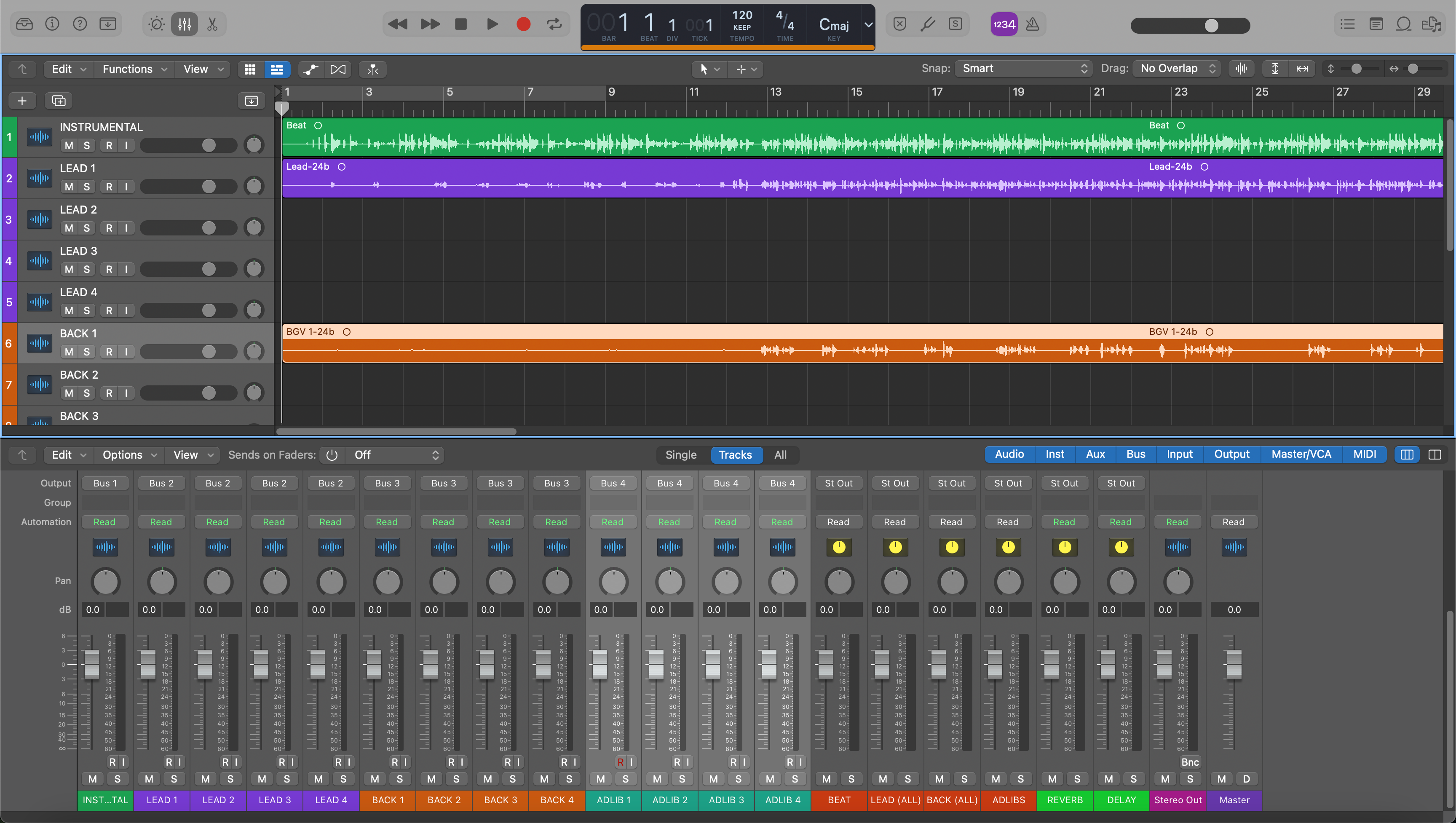
Our Recording Templates include sessions pre-configured for sample manipulation workflows, helping you get started with these techniques quickly.
6 Types of Loops in Production
Different loop types serve different purposes in production. Understanding these categories helps you choose the right approach for each situation.
Rhythmic Loops
Drum loops: The most common loop type, providing rhythmic foundation. Can be full kit recordings, electronic beats, or percussion elements. Usually 1-8 bars long.
Bass loops: Repeated bass patterns that lock with drums. Often melodic, so key matching is important. Typically 1-4 bars.
Percussion loops: Supplementary rhythmic elements like shakers, congas, or electronic textures. Add movement and energy without competing with main drums.
Melodic and Harmonic Loops
Chord progressions: Harmonic foundations, often 4-8 bars. Must be carefully tuned to work with other elements. Common in electronic and pop production.
Melodic phrases: Short musical ideas that repeat. Can be hooks, riffs, or background elements. Key and tempo matching is critical.
Textural Loops
Ambient loops: Background textures that create atmosphere. Vinyl crackle, room tone, nature sounds, synthesizer pads. Often very long or designed to be imperceptible as loops.
Noise and FX loops: Rhythmic noise, risers, impacts. Add energy and movement to arrangements.
7 Common Looping Mistakes to Avoid
Even experienced producers make these errors. Awareness helps you avoid them and create more polished productions.
Audible Loop Points
The most obvious mistake is a loop that clicks or pops at the boundary. This almost always indicates loop points that aren't at zero crossings or have mismatched amplitudes. Always audition loops in isolation before using them in a mix where other sounds might mask the problem temporarily.
Tempo Drift
Loops that aren't precisely tempo-matched will drift out of sync over time. Even small errors accumulate. A loop that's 1% off tempo will be noticeably out of sync after a few bars. Use grid snapping and tempo-synced loop lengths to avoid this.
Over-Repetition
Short loops that repeat too many times become fatiguing and expose their looped nature. Add variation through automation, effects, arrangement, or by using multiple related loops. The human ear quickly detects exact repetition and loses interest.
Phase Issues
Layering multiple loops can create phase cancellation, especially in low frequencies. If your loops sound thin when combined, check for phase issues. Adjusting timing by a few milliseconds or inverting polarity can help.
8 Creative Loop Applications
Beyond basic rhythm construction, loops enable advanced creative techniques that define modern production styles.
Granular Synthesis
Granular synthesis takes looping to the extreme, working with tiny "grains" of audio milliseconds long. These grains can be rearranged, time-stretched, and pitch-shifted to create entirely new textures from any source material. Many ambient and experimental producers rely heavily on granular techniques.
Live Looping
Live looping builds arrangements in real-time by recording and layering loops during performance. Artists like Ed Sheeran and KT Tunstall have popularized this technique. It requires careful attention to loop length and timing but enables solo performers to create full arrangements.
Generative Music
By combining loops of different lengths that don't share common factors, you can create generative systems that never exactly repeat. A 7-bar loop combined with an 11-bar loop will take 77 bars before the exact same combination occurs. This technique creates evolving, ever-changing music from static elements.
For professional help incorporating loops into polished productions, our Mixing Services team has extensive experience with sample-based and loop-driven music across all genres.