





The Complete Guide to Pitch Shifting: Theory, Techniques & Applications
1 What Is Pitch Shifting?
Pitch shifting is the process of changing the pitch of an audio signal without altering its duration. Unlike simple speed changes where faster playback means higher pitch (like a sped-up record), modern pitch shifting uses digital signal processing to independently control pitch and time.
This technology revolutionized music production when it emerged in the 1970s with hardware units like the Eventide H910. Today, pitch shifting is built into every DAW and countless plugins, making it an essential tool for producers, engineers, and sound designers alike.
Common applications include correcting off-pitch vocals, transposing samples to match your project key, creating harmonies from a single vocal take, and designing otherworldly sound effects for film and games.
2 The Mathematics Behind Pitch Shifting
Pitch shifting relies on the mathematical relationship between frequency and musical intervals. In equal temperament tuning (the standard for modern Western music), each semitone represents a frequency multiplication by the 12th root of 2 (approximately 1.0595).
The Fundamental Formula
To calculate the new frequency after pitch shifting: New Frequency = Original Frequency × 2^(semitones/12)
This means shifting up 12 semitones (one octave) exactly doubles the frequency. Shifting down 12 semitones halves it. The relationship is logarithmic, which is why equal semitone steps sound equally spaced to our ears despite representing different absolute frequency changes.
Ratio and Speed Relationship
The pitch ratio directly corresponds to what the speed change would be without time correction. A ratio of 2.0 means the pitch is one octave higher—the same as playing audio at 200% speed. Our Semitone Calculator can help you convert between these values.
3 Pitch Shifting Algorithms Explained
Different pitch shifting algorithms produce varying results depending on the source material and the amount of shift required. Understanding these helps you choose the right tool for each situation.
Time-Domain Algorithms (OLA, SOLA, PSOLA)
These algorithms work by chopping audio into small overlapping segments and repositioning them. They work well on monophonic material and small pitch shifts but can introduce artifacts on complex polyphonic content or large shifts.
Frequency-Domain Algorithms (Phase Vocoder)
Phase vocoders use FFT (Fast Fourier Transform) to analyze and resynthesize audio. They handle polyphonic material better but can produce "phasiness" or metallic artifacts, especially on transients.
Modern Hybrid Algorithms
Contemporary algorithms like Elastique, Soundtouch, and proprietary DAW algorithms combine multiple techniques. They analyze transients separately, use different processing for tonal vs. noise content, and employ sophisticated phase correction.
4 Understanding Semitones and Cents
Musicians and audio engineers use two primary units for measuring pitch changes: semitones and cents. Understanding both is crucial for precise pitch work.
Semitones
A semitone is the smallest interval in standard Western music—the distance from any piano key to the adjacent key. Twelve semitones equal one octave. Most pitch shifters use semitones as their primary unit because they correspond directly to musical intervals.
Cents
Cents provide finer resolution: 100 cents equals one semitone. This unit is essential for fine-tuning, correcting slightly off-pitch recordings, or matching samples recorded at non-standard tunings. Use our Cents Calculator for precise tuning calculations.
Human pitch perception can typically distinguish differences of 5-10 cents in isolation, though in a mix, larger differences may go unnoticed. Professional tuning typically aims for within ±5 cents of the target pitch.
5 Creative Uses in Music Production
Beyond corrective applications, pitch shifting opens vast creative possibilities that have defined genres and production styles.
Vocal Effects
Shifting vocals up creates the classic "chipmunk" effect used in dance music. Shifting down creates demonic or slowed textures. Subtle shifts of ±2-3 semitones with the dry signal create natural-sounding doubling effects thicker than simple delays.
Sample Manipulation
Transposing samples is fundamental to sample-based production. A vocal phrase in one key can be shifted to match your track. Drum hits can be pitched down for weight or up for snap. Use our Key Transpose Calculator to determine exact shift amounts.
Sound Design
Extreme pitch shifting transforms ordinary sounds into otherworldly textures. Recording at high sample rates then pitching down dramatically creates massive sub-bass impacts and alien atmospheres commonly heard in film sound design.
6 Maintaining Audio Quality
All pitch shifting introduces some artifacts. Minimizing them requires understanding their causes and applying appropriate techniques.
Artifact Types
Common artifacts include: metallic or "phasey" textures (phase vocoder artifacts), temporal smearing of transients, formant shifting that makes voices sound unnatural, and granular artifacts from time-domain processing.
Best Practices
Keep shifts small when possible—±3 semitones typically sounds clean. For larger shifts, consider re-recording or using formant-preserving algorithms. Process clean, well-recorded source material. Apply pitch shifting before other processing when practical.
7 DAW-Specific Techniques
Each DAW implements pitch shifting differently. Knowing your tools helps you achieve better results faster.
Ableton Live
Live offers multiple warp modes. Complex Pro works best for full mixes, Beats for drums, Texture for pads, and Tones for monophonic content. The Transpose control in clip view provides quick semitone adjustment.
Logic Pro
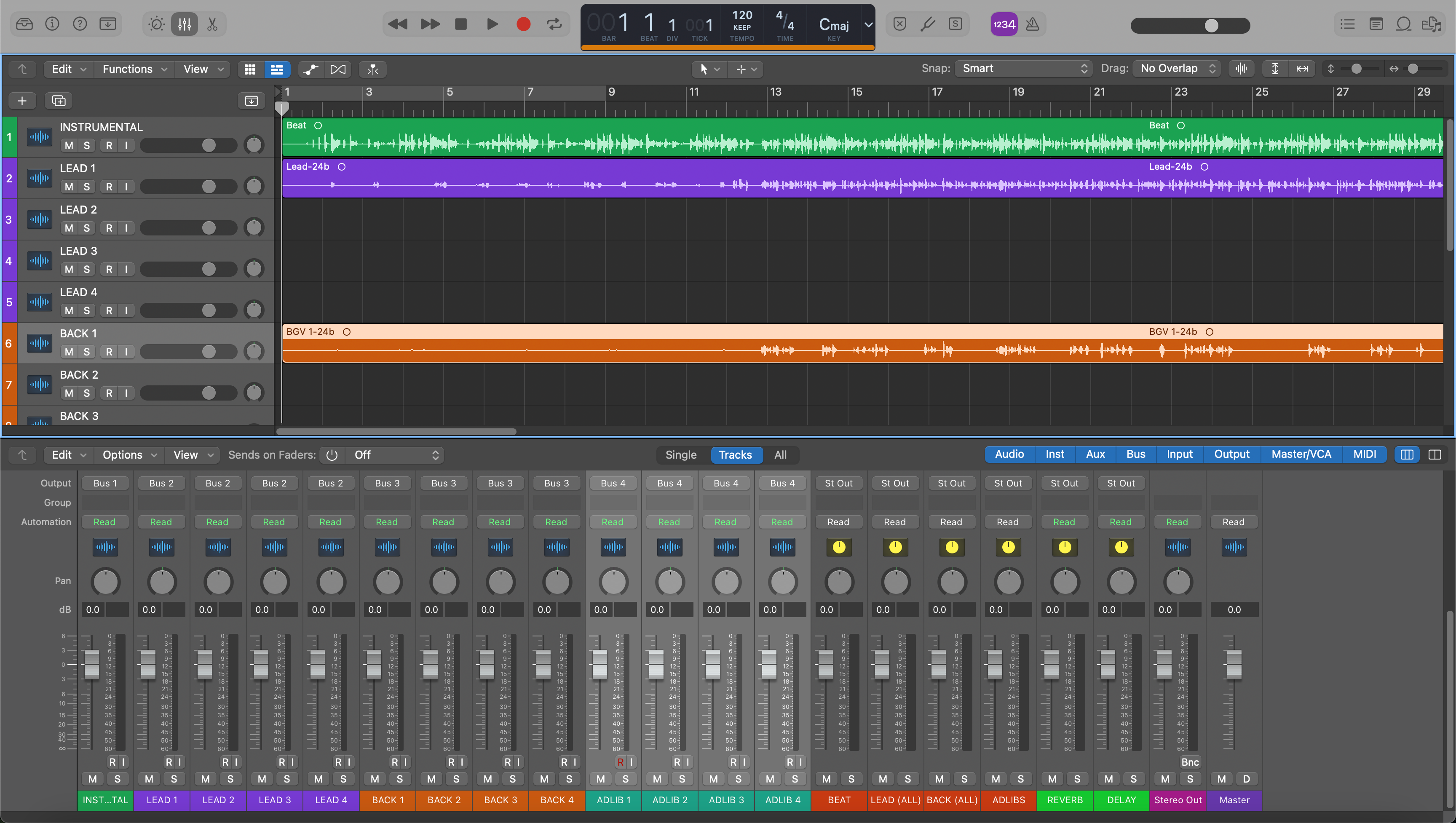
Flex Pitch provides note-by-note pitch editing for monophonic content. For polyphonic shifting, use the Pitch Shifter plugin or the Time and Pitch Machine in the Audio File Editor.
Pro Tools
Elastic Audio offers various algorithms including Polyphonic, Rhythmic, Monophonic, and Varispeed. The Pitch Shift plugin provides real-time adjustment, while AudioSuite processing allows high-quality offline rendering.
8 Advanced Pitch Manipulation
Beyond basic shifting, advanced techniques unlock sophisticated creative and corrective possibilities.
Pitch Automation
Automating pitch shift over time creates rises, falls, and modulation effects. Slow sweeps build tension; fast modulation creates vibrato or Leslie speaker effects.
Frequency-Selective Shifting
Some processors allow shifting only certain frequency ranges. This enables harmonizing bass notes independently or shifting only the fundamental while preserving overtone relationships.
Integration with Other Effects
Pitch shifters combined with delays create harmonizer effects. Before distortion, pitch shifting changes the harmonic content dramatically. Explore our Delay Time Calculator for tempo-synced delay integration.
Understanding pitch shifting deeply transforms it from a simple tool into a powerful creative instrument. Whether correcting a slightly flat vocal or designing alien soundscapes, these principles guide you toward professional results.