



Sample Rate Conversion: The Complete Guide for Audio Professionals
Understanding Sample Rate in Digital Audio
Sample rate represents one of the fundamental parameters in digital audio, defining how many times per second an analog audio signal is measured and converted into digital data. This measurement frequency determines the highest audio frequency that can be accurately captured and reproduced according to the Nyquist theorem.
When audio is digitized, the continuous analog waveform is sampled at regular intervals. Each sample captures the amplitude of the waveform at that precise moment. These samples, when played back in sequence at the same rate, reconstruct the original waveform. The sample rate directly determines the fidelity of this reconstruction, particularly for high-frequency content.
The Nyquist theorem establishes that a digital system can accurately represent frequencies up to half the sample rate. This means a 44.1 kHz sample rate can theoretically capture frequencies up to 22.05 kHz, which comfortably exceeds the typical range of human hearing. Higher sample rates extend this limit further, offering benefits that engineers continue to debate and explore.
Understanding sample rate becomes crucial when working across different delivery formats, collaborating with other studios, or combining audio from various sources. Each context may require different sample rates, making conversion an essential skill for modern audio professionals.
Common Sample Rates and Their Origins
The variety of sample rates in use today stems from different industries developing their standards independently. Understanding these origins helps explain why certain sample rates remain dominant in specific contexts.
| Sample Rate | Primary Use | Nyquist Frequency |
|---|---|---|
| 44,100 Hz | CD Audio, Streaming | 22.05 kHz |
| 48,000 Hz | Video, Film, Broadcast | 24 kHz |
| 88,200 Hz | High-res CD family | 44.1 kHz |
| 96,000 Hz | High-res video family | 48 kHz |
| 176,400 Hz | Archival, mastering | 88.2 kHz |
| 192,000 Hz | High-res production | 96 kHz |
The 44.1 kHz rate originated from early digital recording systems that used modified video equipment to store audio data. The math worked out to capture slightly more than the 20 kHz upper limit of human hearing while accommodating the technical constraints of video-based storage systems.
The 48 kHz rate emerged from the professional video and broadcast industries, which developed their own digital audio standards. This rate provides a clean relationship with video frame rates and offers slightly more frequency headroom than the CD standard.
Why Different Sample Rates Exist
The coexistence of multiple sample rate standards creates challenges for audio professionals but exists for legitimate technical and historical reasons. Understanding these reasons helps inform decisions about when conversion is necessary and how to approach it optimally.
Music production traditionally centered on the 44.1 kHz family of rates because the CD remains an important distribution format. Recording at 44.1 kHz or its multiples (88.2 kHz, 176.4 kHz) means simpler conversion when creating the final CD master. This integer relationship between rates allows mathematically cleaner downsampling.
Video and film production standardized on 48 kHz because it integrates better with video frame rates and broadcast specifications. Any audio destined for video, television, or film typically needs to conform to this standard, making 48 kHz the default for post-production studios and video-focused workflows.
Higher sample rates like 96 kHz and 192 kHz gained popularity for recording because they offer potential benefits during processing. Some engineers report that plugins and processing sound better at elevated sample rates, and the extra headroom above audible frequencies can prevent aliasing artifacts in certain situations.
How Sample Rate Conversion Works
Sample rate conversion is a mathematical process that creates new samples representing the audio at a different sample rate. Unlike simple tasks like changing bit depth, sample rate conversion requires sophisticated algorithms that interpolate between existing samples to generate new ones.
The conversion process involves filtering the audio to remove frequencies above the new Nyquist limit (when downsampling) and then resampling to create the new set of samples. High-quality converters use advanced filtering techniques to minimize artifacts while preserving the original audio character as much as possible.
When upsampling from a lower to higher sample rate, the converter must create new sample values that did not exist in the original. This interpolation process uses mathematical predictions based on surrounding samples to generate plausible values for the new sample points.
Downsampling presents different challenges. The converter must first low-pass filter the audio to remove any content above the new Nyquist frequency. Without this filtering, these frequencies would alias down into the audible range, creating unpleasant artifacts. The quality of this anti-aliasing filter significantly affects the final result.
Quality Considerations in Conversion
Not all sample rate conversions are equal, and the quality of conversion depends heavily on the algorithms used and the relationship between source and target rates. Understanding these factors helps you make informed decisions about when and how to convert.
The best-case scenario for sample rate conversion involves integer relationships between rates. Converting 88.2 kHz to 44.1 kHz is relatively straightforward because every other sample from the source can map directly to the destination. Converting 96 kHz to 48 kHz offers similarly clean mathematics.
Non-integer conversions like 44.1 kHz to 48 kHz require more complex processing because the sample points do not align neatly. The converter must calculate entirely new sample values through interpolation, which introduces some degree of approximation. High-quality converters minimize the audible impact of this approximation, but it remains technically imperfect.
Professional DAWs and dedicated conversion software typically use sophisticated algorithms that produce transparent results for most practical purposes. However, repeated conversions compound any small errors, making it advisable to minimize the number of conversion steps in your workflow.
Professional Recording Templates
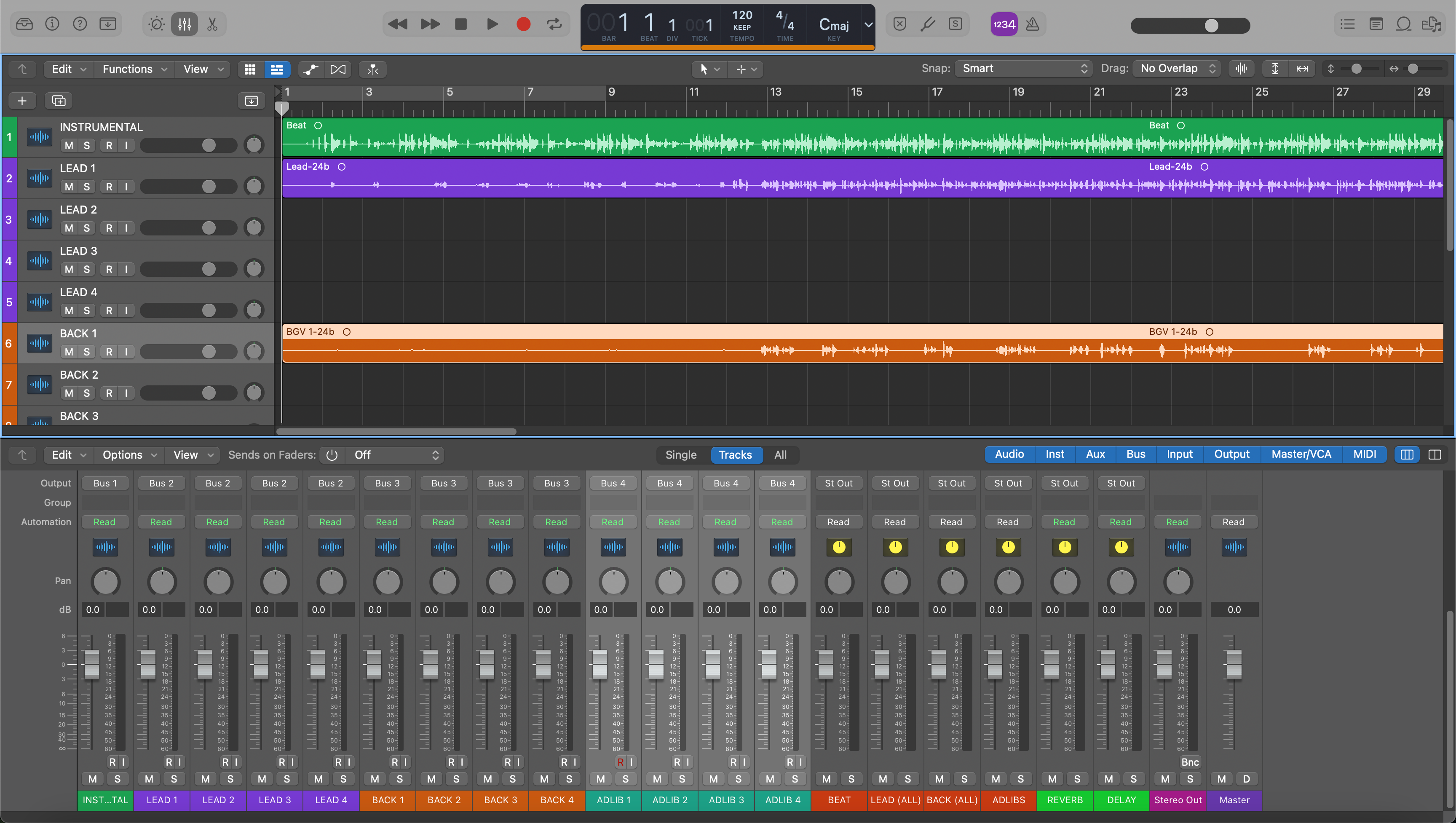
Our recording templates are configured with optimal sample rates for different project types, helping you start right from the first recording.
Browse TemplatesInteger vs Non-Integer Rate Relationships
The mathematical relationship between sample rates significantly impacts conversion quality. Integer relationships allow simpler, more accurate conversion, while non-integer relationships require approximations that can theoretically affect audio quality.
The 44.1 kHz family includes 88.2 kHz and 176.4 kHz, all integer multiples of the base rate. Converting between these rates is relatively simple because sample values can be directly computed rather than interpolated. Similarly, the 48 kHz family includes 96 kHz and 192 kHz with the same clean relationships.
Converting between families (44.1 kHz to 48 kHz or vice versa) involves a ratio of 147:160, which requires sophisticated interpolation. Modern algorithms handle this conversion with minimal audible artifacts, but the mathematical complexity means more processing and theoretically more potential for subtle changes.
For critical applications where maximum quality is essential, choosing your initial sample rate based on the final delivery format avoids cross-family conversion entirely. If your project will ultimately be released on CD (44.1 kHz) and for video (48 kHz), starting at 96 kHz allows clean integer conversion to both destinations.
Workflow Best Practices
Establishing good practices around sample rate management prevents quality loss and workflow complications. These guidelines help you navigate the multi-rate reality of modern audio production while maintaining the highest possible quality.
Begin by determining your delivery requirements before starting a project. If the audio is destined for video, starting at 48 kHz or 96 kHz makes sense. For music-only projects targeting streaming and CD release, 44.1 kHz or 88.2 kHz provides the cleanest path to final delivery.
When working with audio from multiple sources at different sample rates, convert everything to your project rate before beginning serious editing or mixing. This ensures all processing happens at a consistent rate and prevents your DAW from performing real-time conversion that might introduce latency or quality issues.
Use high-quality conversion tools for final delivery. While DAW real-time conversion works fine for rough monitoring, dedicated conversion software or offline high-quality conversion produces better results for final masters. Many professionals use specialized tools like iZotope RX or dedicated sample rate converters for this purpose.
Document your sample rates throughout the project. Session notes should record the working sample rate, any source files that required conversion, and the target delivery rates. This documentation proves invaluable if you need to revisit the project later or hand it off to another engineer.
Choosing the Right Sample Rate for Your Project
Selecting an appropriate sample rate involves balancing quality considerations, storage requirements, processing demands, and delivery specifications. There is no single correct answer, but understanding the tradeoffs helps you make informed decisions for each project.
For most music production destined for streaming services, 44.1 kHz or 48 kHz provides sufficient quality with minimal overhead. The audible difference between these rates and higher options is debatable for final listening, and the practical benefits of smaller file sizes and lower processing demands are concrete.
Recording at higher sample rates like 96 kHz makes sense when you expect heavy processing, particularly with plugins that might generate aliasing at lower rates. The extra headroom can also benefit archival recordings where future-proofing has value.
Video and film work should generally use 48 kHz or its multiples to align with industry standards. Converting audio to 48 kHz for video delivery is common and produces excellent results, but starting in the 48 kHz family avoids the conversion step entirely.