





The Art of Vocal EQ
Vocals are the most important element in most productions—they carry the melody, lyrics, and emotional connection. Getting vocal EQ right can make or break a mix. Unlike other instruments, vocals need to sit "in front" of everything else while still blending with the track. This requires careful frequency management.
Every voice is unique. Two singers can perform the same song in the same key and require completely different EQ treatment. The key is understanding what each frequency range does to vocals and learning to identify problems by ear.
1 Vocal Frequency Ranges
Low End (60-200Hz)
This range contains proximity effect buildup (when singing close to the mic), room rumble, and some chest resonance. Male vocals have more useful content here than female vocals. High-pass filtering around 80-120Hz is almost always beneficial. Be careful not to cut into chest resonance that gives the voice body.
Low Mids (200-500Hz)
The "mud" zone for vocals. Too much makes vocals sound boomy, thick, or unclear. Too little sounds thin and hollow. A gentle dip around 200-400Hz often clears up problematic vocals. However, cutting too aggressively here removes warmth and body.
Midrange (500Hz-2kHz)
The core of vocal intelligibility. Nasal or "honky" qualities appear around 800Hz-1kHz. The lower part of this range provides warmth and fullness; the upper part begins the presence zone. This range requires careful handling—problems here are very noticeable.
Presence (2-5kHz)
The critical range for vocal clarity and "cut-through." Boosting here brings the vocal forward in the mix and improves intelligibility. However, overemphasis causes harshness and listener fatigue. The "sweet spot" varies by singer—some voices need a boost at 2.5kHz, others at 4kHz.
Sibilance (5-8kHz)
Where "S," "T," and "F" sounds live. Excessive energy here makes vocals harsh and spitty. This is typically addressed with a de-esser rather than static EQ, as cutting here uniformly would dull the entire vocal.
Air (8-15kHz)
The "breath" and "air" of vocals. Boosting with a high shelf adds openness and a sense of expensive, polished production. Female and breathy vocal styles often benefit from generous air boost. Be careful with noisy recordings—this range amplifies hiss.
Essential Technique: Always EQ vocals in context of the full mix, not in solo. A vocal that sounds perfect soloed might sound thin or harsh when the music plays. The mix context determines what the vocal actually needs.
2 EQ by Vocal Style
Pop/Contemporary Vocals
Modern pop vocals are typically bright and present with controlled low end. High-pass around 100Hz, cut mud at 200-300Hz, boost presence at 3-5kHz, and add air at 10-12kHz. Compression keeps everything even. Sibilance control is crucial.
Rock Vocals
Rock vocals often need more grit and midrange presence to compete with guitars. Less high-frequency air, more 1-3kHz presence. The vocal may need to be "dirtier" than pop—some harshness can actually help it cut through dense arrangements.
R/Soul Vocals
Warmth and smoothness are key. Preserve low-mid body (200-400Hz), gentle presence boost, and careful sibilance control. The vocal should feel intimate and rich, not bright and cutting. Air frequencies add sophistication without harshness.
Rap Vocals
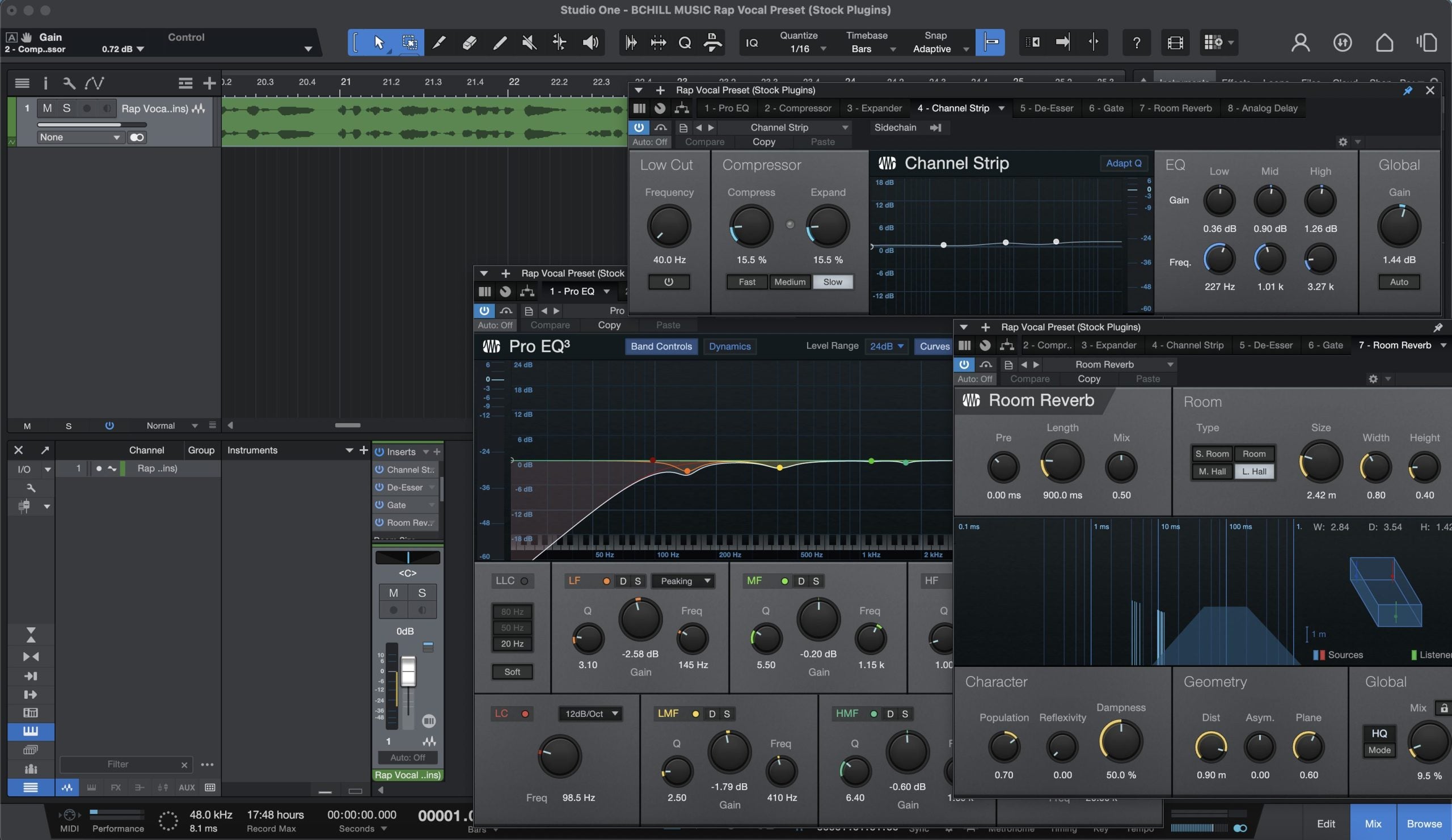
Clarity and intelligibility are paramount for rapid lyrics. Aggressive presence boost at 3-5kHz for consonant clarity. Cut more low end than singing vocals. Multiple de-essing stages may be needed for fast delivery. The vocal needs to punch through the beat.
Acoustic/Folk Vocals
Natural, unprocessed sound is often the goal. Less EQ overall—just clean up problems. Preserve natural room ambience if appropriate. Gentle air boost for openness. Avoid over-processing that removes the intimate, authentic quality.
3 The Vocal Processing Chain
The order of processing matters significantly for vocals:
- High-Pass Filter: Remove low-end rumble before anything else
- Subtractive EQ: Cut problems—mud, boxiness, harsh resonances
- Compression: Control dynamics (after removing problems so they don't trigger compression)
- De-Esser: Control sibilance after compression has evened out dynamics
- Additive EQ: Enhance presence and air for tonal character
- Effects: Reverb, delay, and other effects last in the chain
4 Common Vocal EQ Mistakes
Boosting Instead of Cutting
If a vocal sounds dull, the instinct is to boost high frequencies. Often, the real problem is competing elements masking the vocal. Try cutting 2-4kHz in guitars, synths, or other midrange-heavy elements before boosting the vocal.
Over-Processing
Sometimes the best vocal EQ is minimal EQ. If the recording is good and the vocal sits well naturally, don't EQ just because you "should." Subtle moves are usually more effective than dramatic ones.
Ignoring the Context
A bright, present vocal EQ that sounds amazing during the chorus might be too harsh during a quiet verse. Consider using automation to adjust EQ settings for different sections of the song.
Pro Tip: When EQing vocals, make your adjustments, then bypass the EQ and listen to the raw vocal. If the processed version sounds obviously better in context, you're on the right track. If you're not sure, you may be over-processing.
5 De-Essing Techniques
Sibilance requires special attention. Static EQ cuts at sibilant frequencies would dull the entire vocal. De-essers are dynamic processors that only reduce those frequencies when they exceed a threshold:
- Frequency: Typically 5-8kHz for female vocals, 4-7kHz for male
- Threshold: Set so it only catches the "S" sounds, not regular consonants
- Amount: 3-6dB reduction is usually sufficient; more sounds unnatural
- Multiple stages: Two gentle de-essers often sound more natural than one aggressive one
6 Dynamic EQ for Vocals
Dynamic EQ combines the precision of EQ with the responsiveness of compression. Instead of cutting or boosting a frequency constantly, dynamic EQ only acts when that frequency exceeds a threshold:
- Resonance control: Tame specific resonant frequencies only when they become problematic
- Proximity effect: Reduce low-end buildup dynamically when the singer moves closer to the mic
- Harshness control: Address 2-4kHz harshness only on loud phrases
- Presence enhancement: Boost presence frequencies only when the vocal drops in level
Dynamic EQ is particularly useful for live recordings or performances with significant variation in dynamics and mic technique. It allows more transparent processing than static EQ cuts.
7 Reference and Final Checks
Before finalizing your vocal EQ, perform these essential checks:
- A/B comparison: Compare your processed vocal against professional references in the same genre
- Multiple playback systems: Check how the vocal translates on speakers, headphones, and earbuds
- Mono compatibility: Ensure any stereo EQ moves don't cause phase issues in mono
- Fresh ears test: Take a break and return with fresh perspective before committing
Remember that vocal EQ decisions depend entirely on context—the recording quality, the singer's voice, and the arrangement all influence what the vocal needs. Trust your ears, reference often, and don't be afraid to make bold moves when the vocal calls for it.