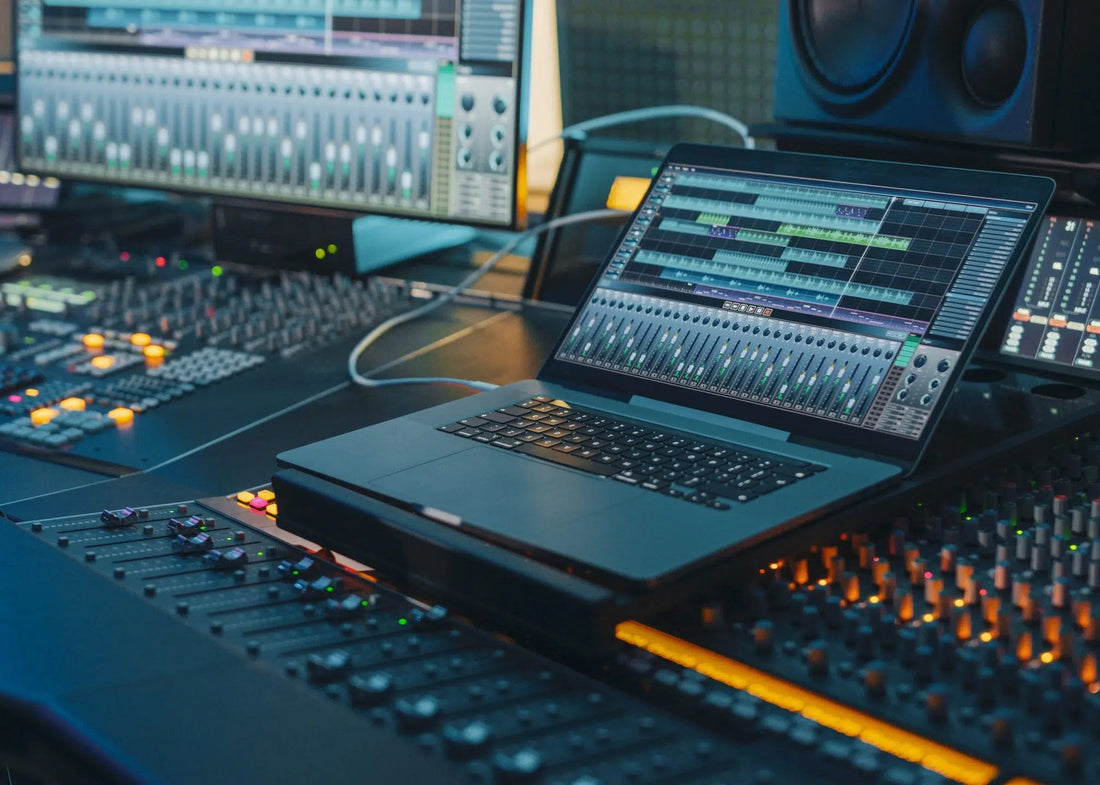
How to Master AI-Generated Ambient Music Without Destroying Dynamics
Master AI-generated ambient music by protecting the movement, quiet sections, width, and emotional build instead of chasing loudness first. Ambient tracks made with Suno, Udio, or other AI tools can sound impressive because they create instant atmosphere, but they often need careful mastering for noise control, low-end balance, stereo safety, tonal depth, and translation. The master should make the piece feel finished without flattening the space that makes ambient music work.
Have an AI-generated ambient track that needs polish without losing its space, quiet detail, or emotional build?
Book Mastering ServicesAmbient mastering is different from mastering a trap song, pop song, or club track. The loudest part of the song may not be a snare, kick, or chorus. It may be a pad opening slowly, a texture rising, a low drone becoming wider, or a quiet section becoming emotionally heavier because the listener leans in. If the master crushes those movements, the track may become louder but less powerful.
AI-generated ambient music can be especially delicate. The tool may create beautiful layers quickly, but the exported file can contain low-level noise, smeared reverb tails, cloudy low-mids, harsh upper textures, unstable stereo width, or a flat loudness shape. Those issues are easy to make worse if mastering is treated like a one-click loudness pass.
The best ambient master keeps the listener inside the world of the track. It improves translation, balances the spectrum, removes distracting problems, and gives the piece a finished edge. It does not punish the music for being spacious.
Quick Diagnosis Table
| Problem | Likely cause | First fix to test |
|---|---|---|
| Ambient track gets smaller after mastering | Too much compression or limiting removes the build | Back off limiting and preserve the main loudness contrast |
| Quiet sections feel noisy | AI texture, hiss, artifacts, or room-like noise is exposed | Clean only distracting noise and avoid stripping intentional texture |
| Low drone overwhelms headphones | Sub or low-mid buildup has no transient to reveal it | Use subtle EQ or dynamic control on sustained low energy |
| Track sounds wide but collapses in mono | Stereo effects or generated phase width are unstable | Check mono and control side information in the low range |
| High textures feel sharp | AI shimmer, synthetic air, or reverb tails are too bright | Use gentle high-frequency control instead of broad darkening |
| Streaming version feels too quiet | Master preserved dynamics but lacks perceived density | Add controlled tone and density without flattening peaks and valleys |
Start With the Purpose of the Ambient Track
Before mastering, define what the ambient piece is supposed to do. Is it meditation music, cinematic background, sleep music, game underscore, YouTube content music, experimental art, worship atmosphere, or a texture bed for a larger project? The right master depends on the use case.
A track for sleep or meditation may need softer transients, less brightness, and a smoother level. A cinematic cue may need wider dynamics so the build feels dramatic. A YouTube background track may need enough consistency to sit under speech without jumping out. A streaming release may need a polished tonal balance while still preserving the quiet-to-loud journey.
Do not master every ambient track to the same loudness target or tonal shape. Ambient music often carries emotion through change, distance, and texture. The master has to respect that purpose before it solves technical issues.
Choose the Cleanest AI Export Before Mastering
Mastering can improve a strong AI ambient export, but it should not be the first rescue step for a broken one. Listen through the full piece and choose the version with the best emotional movement, cleanest tails, least distracting artifacts, and most believable low end. A beautiful idea with a constant harsh shimmer may become fatiguing after mastering. A slightly quieter but cleaner generation may master much better.
If the platform offers high-quality WAV or multitrack exports, use them. Suno Studio can export full songs, selected sections, individual clips, and multitrack stems depending on the workflow. Stems can help if the pad, drone, texture, or lead layer needs separate treatment before the final master. A stereo export can work, but it gives less control when a single layer causes the problem.
Do not normalize every export to maximum loudness before sending it. Leave natural headroom. A master has more room to shape tone, image, and level when the source is not already slammed.
Preserve the Peaks and Valleys
Ambient music can have huge emotional dynamics even without drums. A quiet texture may introduce the world. A slow swell may create tension. A dense section may feel large because the earlier section was restrained. If mastering makes every section equally loud, the arrangement loses its story.
Listen for the emotional peaks and valleys before adding processing. Mark the quietest meaningful section, the loudest section, and the place where the track should feel most immersive. The master should enhance those relationships. If the climax no longer feels larger than the intro, the master is too flat.
Use compression only when it solves a real problem. Gentle compression can add cohesion, but too much can erase the slow-motion breathing that ambient relies on. If density is needed, parallel compression or very subtle wideband control can sometimes help without closing down the music.
Control Low-End Sustain Without Killing Warmth
Ambient low end is often sustained rather than punchy. Drones, pads, sub layers, and synthetic room tones can build energy over time. Because there may not be a kick or snare to reveal the rhythm, the low end can feel fine at first and then become tiring after two minutes.
Use EQ slowly. Do not remove all the warmth just because the low end looks heavy on a meter. Listen to whether the low energy supports the mood or distracts from it. If the track feels cloudy, try small cuts in the low-mid range before reaching for aggressive filtering. If the sub makes speakers work too hard without adding emotion, control it gently.
Dynamic EQ can be useful when a drone blooms only in certain sections. A static cut may thin the entire track, while dynamic control can step in only when the low energy becomes too much. The goal is a low end that feels deep and calm, not weak or bloated.
Respect Quiet Detail and Noise Floor
Quiet details are part of ambient music. Air, grain, breath-like movement, distant textures, and soft transitions can make the track feel alive. But AI-generated ambient music can also contain artifacts that are not intentional: hiss-like noise, smeared high-frequency grit, unstable reverb tails, or small glitches that become obvious when the master raises level.
The mastering decision is not simply "remove noise." It is "remove what distracts from the piece." If a texture creates atmosphere, keep it. If a click, buzz, or artifact pulls attention away from the mood, reduce it. Over-cleaning can make ambient music sterile. Under-cleaning can make it feel unfinished.
Listen to quiet sections on headphones. Many problems hide under louder passages but become obvious in intros, breakdowns, and endings. If the quiet sections are emotionally important, they deserve as much attention as the loudest section.
Handle Stereo Width With Care
AI-generated ambient music can be extremely wide. Wide pads and reverbs can sound beautiful, but they can also create phase problems. If too much low-frequency information lives in the sides, the track may feel huge on headphones and weak on speakers. If the whole image is widened, the center can disappear.
Check mono and narrow playback early. The track does not need to sound identical in mono, but it should not collapse emotionally. The main drone, tonal center, or melodic focus should still exist. If the low end disappears, control the side information below the problem range. If the high textures smear, narrow only the unstable layers or frequency area.
Width is most effective when it has contrast. A track that is wide all the time can become flat in its own way. Let some sections feel closer and others open wider. Mastering should preserve that sense of distance.
Avoid Brightness That Turns Into Fatigue
Ambient music often uses shimmer, air, granular textures, bells, synthetic noise, and reverb tails. Those elements can feel magical at low volume and painful when lifted by mastering. AI-generated highs can be especially tricky because they may sound like detail at first but become a constant layer of glassy energy.
Use high-frequency EQ with restraint. If the track feels dull, first check whether the low-mids are clouding it. Removing a little mud can reveal clarity without adding more top end. If the top needs polish, use small moves and test over the full song, not only a short loop.
De-harshing tools or dynamic EQ can control the sharpest moments without darkening the whole master. This is useful when one texture blooms in the high range only during a climax. The listener should feel immersion, not ear fatigue.
Use Compression Settings That Follow the Music
Ambient compression should usually be slower and more forgiving than compression on drum-driven music. Fast attacks can flatten the small swells and micro-transients that make the track breathe. Fast releases can create unnatural pumping in sustained pads. Heavy ratios can make the piece feel trapped.
If compression is needed, start with a gentle ratio, soft knee, slower attack, and release that moves with the track. Watch gain reduction, but do not mix by numbers only. Listen to whether the quiet parts still feel quiet and the big sections still feel like arrivals.
The Attack Release Calculator can help with timing ideas, but ambient mastering still depends on feel. A tempo-based release may be a starting point, not a rule. Sustained music may need more patience than a beat-driven song.
Do Not Chase Loudness Like a Rap or EDM Master
Ambient music can be commercially polished without being aggressively loud. If you push limiting until the waveform becomes a block, you may remove the entire reason the track works. Loudness should serve the use case. A background cue, meditation track, or cinematic bed may need a different loudness strategy than a single meant to compete with club records.
Perceived loudness can come from tonal balance, controlled low end, stable width, and clean midrange. You do not always need heavy limiting. Sometimes the best master sounds more expensive because it is calm, deep, and controlled rather than loud.
That does not mean the master should be weak. It should translate. It should play comfortably on headphones, speakers, phones, and streaming platforms. It should not force the listener to turn the volume up and down constantly unless that is part of the artistic design.
Prepare the Ambient File for Mastering
- Export the final stereo mix as WAV when possible.
- Leave headroom; do not add a limiter just to make the file louder.
- Send stems if one layer needs separate repair before mastering.
- Include notes about the intended use: streaming, sync, meditation, YouTube, film, or personal release.
- Send one or two reference tracks for tone, depth, and loudness feel.
- Point out any intentional noise, vinyl texture, field-recording style, or lo-fi texture.
- Check the exported file from start to end for clicks, cut tails, or fade problems.
- Do not trim reverb tails too tightly.
- Do not convert a clean WAV to MP3 before mastering.
Choose References for Depth, Not Just Loudness
Reference tracks are still useful for ambient mastering, but they should be chosen differently than references for rap, pop, or EDM. Do not choose a reference only because it is loud. Choose references that show the kind of depth, darkness, width, low-end calm, and emotional movement you want. If your AI ambient piece is meant to feel meditative, a loud cinematic trailer cue may push the master in the wrong direction. If the piece is meant for a game or film scene, a sleep playlist reference may make it too soft and uneventful.
Use one reference for tone and one reference for level if needed. A tonal reference helps answer whether the track should be warm, bright, dark, airy, dense, or sparse. A level reference helps answer how forward the final file should feel. Keeping those jobs separate stops you from over-processing the song just because one reference is louder.
When comparing, level-match the reference and your track. Louder usually feels better for a few seconds, so a fair comparison matters. Listen for the width of the low end, the smoothness of the high textures, the amount of noise in quiet sections, and how much the climax rises above the intro. Those details are more useful than simply trying to hit the same loudness number.
Build the Mastering Chain in Small Decisions
A good ambient mastering chain may be very simple. It might include cleanup, subtle EQ, small dynamic control, stereo image correction, and a limiter doing only what is necessary. The order depends on the track, but the mindset should stay the same: solve one problem at a time and gain-match each move so you are not fooled by volume.
Start with repairs only if they are needed. A click, harsh ring, or distracting artifact should be handled before broad tone shaping. Then adjust the tonal balance. If the track is cloudy, clear it gently. If it is thin, restore body without making the low end heavy. If it is sharp, control the problem range instead of dulling the entire master.
After tone, check movement. If compression helps the track feel more finished, use it lightly. If compression makes the track less emotional, skip it. Mastering is not a checklist where every processor must appear. It is a set of decisions that should leave the song better than it arrived.
Think About Alternate Versions Before the Final Export
AI ambient music is often used in more than one place. A creator might need the full streaming version, a shorter loop for a video, a version without a loud ending, or a seamless background version for meditation content. If those versions matter, plan them before the final master rather than chopping the master later without listening.
A seamless loop needs special attention at the start and end. Reverb tails, drones, and noise beds must connect naturally. A short social-media version may need a quicker fade-in and stronger midrange so the mood appears faster on phone speakers. A long-form version may need softer level movement so it does not fatigue the listener over ten or twenty minutes.
Do not assume one export can serve every use. If the track will be used for streaming and background content, the mastering engineer may create alternate levels or edits. That can preserve the musical release version while still giving you practical files for content use.
Use a Pass/Revise Decision Before Paying for Mastering
Before sending an AI ambient track for mastering, decide whether it passes three tests. First, does the composition create the mood you want from start to finish? Second, are the main layers balanced well enough that a stereo master can improve them? Third, are the artifacts acceptable or fixable? If the answer is no, another generation, edit, or mix pass may be smarter than mastering immediately.
Pass the track to mastering when the emotional world is right and the issues are final-stage issues: tone, level, translation, subtle harshness, width, headroom, fades, and polish. Revise the track first when the wrong layer dominates, the main texture is irritating, the low drone is out of control, or the arrangement does not build naturally.
This decision saves money. Mastering is most valuable when it finishes a strong piece. It is least valuable when it is asked to hide the fact that the source still needs arrangement or mixing work.
When the Track Needs Mixing Before Mastering
Some AI ambient problems are mix problems, not mastering problems. If one pad is too loud, one drone is too boomy, one texture is painfully bright, or one transition is broken, mastering may not have enough control to fix it cleanly. In that case, a mix or stem-prep pass may be needed before the final master.
If you have stems, a mixer can rebalance the layers, clean the source, automate movement, and create a better stereo mix. Then mastering can finish that stronger mix. If you only have a stereo file, mastering can still help, but the fix has to affect the whole file or a frequency range rather than one instrument.
Use mixing services when the actual balance of layers is wrong. Use mastering services when the mix already works emotionally and needs final tone, level, translation, and polish.
The Final Ambient Mastering Test
After mastering, listen from beginning to end without touching the volume. The intro should invite the listener in. The quiet sections should still feel meaningful. The loudest sections should feel larger, not merely louder. The ending should decay naturally unless an abrupt ending is intentional.
Check headphones for detail, speakers for stereo image, phone playback for midrange, and a quiet room for noise. Ambient music reveals problems over time, so do not judge only the first thirty seconds. A master that feels impressive instantly but tiring by minute four is not finished.
The right ambient master feels like the same world with better focus. The listener should not notice the processing first. They should notice the space, movement, depth, and emotion.
FAQ
Can AI-generated ambient music be mastered professionally?
Yes. AI-generated ambient music can be mastered professionally when the source has a strong mood and the master preserves movement, space, quiet detail, and tonal balance.
Should ambient music be mastered loud?
Not always. Ambient music often needs depth and dynamics more than aggressive loudness. The right level depends on the release goal, reference tracks, and intended listening context.
Why does my AI ambient track sound smaller after mastering?
It may be over-compressed or over-limited. Too much processing can flatten the quiet-to-loud movement and reduce the sense of space that makes ambient music powerful.
Can mastering remove AI artifacts from ambient music?
Mastering can reduce some distracting noise, harshness, and tonal problems, but it cannot always remove artifacts that are baked deeply into the stereo file. Stems give more repair options.
Should I send stems or a stereo file for ambient mastering?
Send the final stereo mix for normal mastering. Send stems or ask for a mix pass first if one layer is too loud, too harsh, too noisy, or too wide to fix cleanly in stereo mastering.
When should I book mastering services for an AI ambient track?
Book mastering services when the ambient piece already has the right mood and arrangement but needs final polish, translation, controlled loudness, tonal balance, and release-ready depth.