The Minimum Gear Stack for Release-Ready Vocals on a Tight Budget
The minimum gear stack for release-ready vocals is not the most expensive mic you can afford. It is a balanced chain: a reliable vocal mic, a quiet audio interface with enough gain, closed-back headphones, stable mic support, a pop filter, and a recording space controlled well enough that the vocal is not fighting the room.
Most home vocal problems are not caused by one missing luxury item. They come from an uneven setup. A good mic into a noisy interface still sounds noisy. A clean interface in a reflective bedroom still sounds boxy. Nice plugins on a clipped recording still sound clipped. The goal is to buy the few pieces that remove the biggest failure points first, then upgrade only when you know what problem you are solving.
This guide is written for artists recording rap, pop, R&B, indie, singer-songwriter, or demo vocals at home with a tight budget. It keeps the advice practical: what to buy first, what to skip, how to set the room, how to record, and how to know when your setup is good enough to send to a mixer, use with a preset, or release after a careful mix.
What "Release-Ready" Means for a Budget Vocal
Release-ready does not mean the recording sounds like a finished record before mixing. It means the vocal is clean enough that mixing can improve it without spending the whole session repairing basic capture problems. A release-ready raw vocal has clear words, no clipping, controlled room tone, a steady recording level, and no obvious headphone bleed or background noise sitting under every phrase.
A budget setup can absolutely produce that. What it cannot do is rescue a careless recording environment. If the mic is pointed at a bare wall, the gain is too hot, the beat is bleeding through open-back headphones, and the vocal is recorded next to a loud computer fan, the gear price does not matter much. You are printing problems.
The stack below focuses on the pieces that prevent those problems before they become part of the file.
The Minimum Stack at a Glance
| Piece | What it needs to do | Budget target | Why it matters |
|---|---|---|---|
| Vocal microphone | Capture the voice clearly while rejecting some room sound | About $100-$500 | Sets the source tone before plugins can help |
| Audio interface | Provide clean gain, stable recording, and direct monitoring | About $100-$250 | Prevents hiss, latency issues, and weak input level |
| Closed-back headphones | Let you hear the beat without leaking into the mic | About $70-$150 | Keeps click tracks and instrumentals out of the vocal take |
| Stand, shock control, pop filter | Hold position and reduce plosives, bumps, and rumble | About $50-$150 | Protects consistency across takes |
| Room control | Reduce reflections and obvious noise | Free to about $200 | Makes a modest mic sound more finished |
Prices move, and used gear changes the math. Treat these as planning ranges, not exact buying promises. The important point is order. Do not buy a boutique mic while recording in an untreated corner with cheap earbuds and no pop filter.
Buy First: The Microphone That Fits Your Room
The microphone is the piece people obsess over most, but the best budget mic is the one that fits your room and voice. For untreated bedrooms, dynamic cardioid vocal mics are often the safest first choice because they tend to pick up less room detail than many sensitive condensers. That does not make condensers bad. It means a condenser can reveal more of a bad room, which is not helpful when the room is the weakest part of the chain.
Dynamic microphones are usually safer in untreated rooms
A mic like the Shure SM58 is built for vocals, has a cardioid pattern, and is known for rejecting some unwanted sound from the sides and rear. Shure lists the SM58 as a cardioid dynamic microphone with a vocal-tailored response and a 50 Hz to 15 kHz frequency range. In a budget room, that kind of practical rejection and durability matters more than chasing a hyped studio look.
The SM7dB is a higher-cost option for artists who want the SM7-style dynamic vocal sound with a built-in preamp. Shure lists selectable +18 dB or +28 dB gain from its built-in preamp, which can help with interfaces that struggle to drive lower-output dynamic mics cleanly. That does not mean every beginner needs it. It means the mic solves a real gain problem if your budget can handle it.
Condenser microphones need a quieter room
Condenser mics can sound detailed and polished, especially on controlled vocals in treated rooms. They can also capture computer fan noise, wall reflections, air conditioning, outside traffic, and mouth noises more clearly than you want. If your room is not controlled, a budget condenser may make the recording sound more "studio" for ten seconds and more amateur once the mix starts.
Choose a condenser only if the room is quiet, you can control reflections, and your voice benefits from the extra detail. Otherwise, start dynamic and use mic technique, EQ, and compression to create the brightness later.
Buy Second: An Interface With Enough Clean Gain
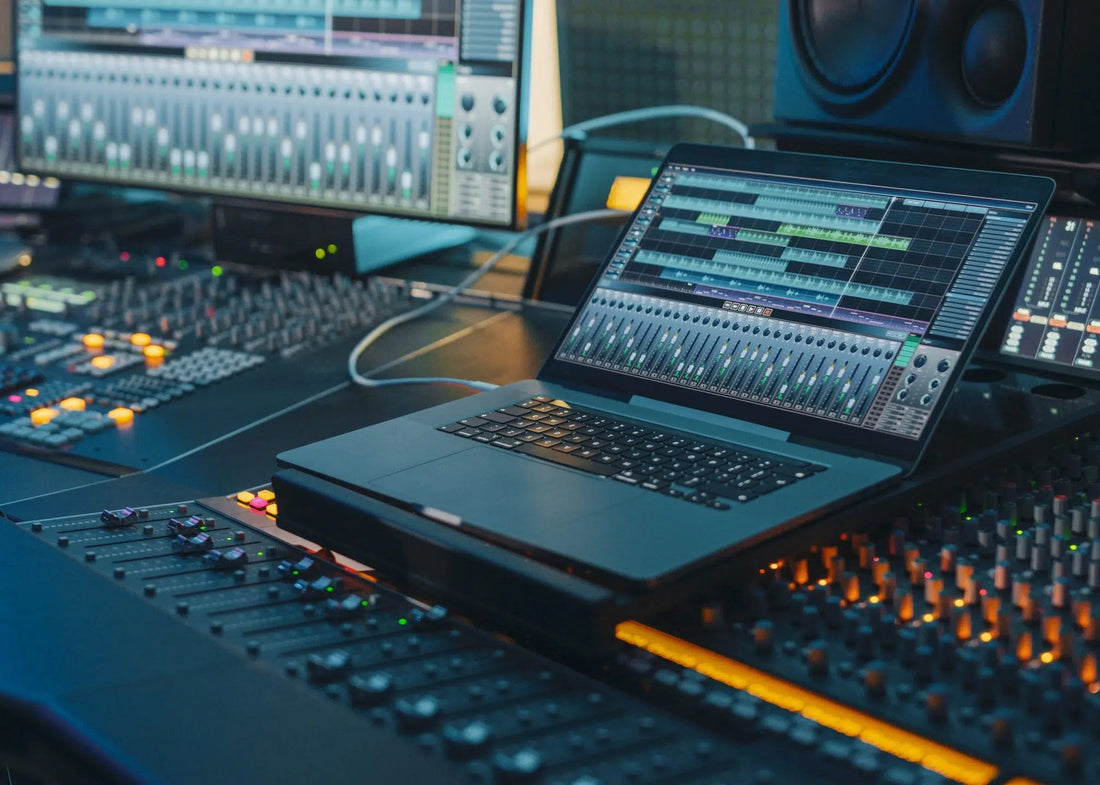
The audio interface converts the microphone signal into audio your computer can record. On a tight budget, you want stability, clean gain, headphone monitoring, and enough headroom. You do not need a rack full of inputs if you are recording one vocal at a time.
Focusrite lists the Scarlett Solo 4th Gen with one microphone preamp, USB-C connectivity, 24-bit/192 kHz conversion, and a microphone input gain range of 57 dB. That kind of spec is enough for many common home vocal setups, especially with a moderate-output mic and proper gain staging. Interfaces in this range are not magic, but they are far better than recording through a laptop microphone or an unreliable adapter.
What "enough gain" really means
Enough gain means you can record a vocal at a healthy level without turning the preamp so high that hiss becomes part of the take. If you have to max the interface gain and the vocal is still weak, you may need better mic technique, a louder performance, a mic with more output, an inline preamp, or a mic with built-in gain like the SM7dB.
Do not solve low input level by recording too close to the mic until every plosive and breath becomes a problem. Get the singer in a controlled position, set the interface so loud phrases do not clip, and leave room for mixing. Peaks around -10 to -6 dBFS are a practical starting point, not a law. The real rule is simple: no clipping, no constant noise, and enough level that plugins react naturally.
Direct monitoring matters
Latency can ruin a performance. If the vocalist hears their voice late in the headphones, timing and pitch confidence suffer. Use direct monitoring or a low-latency monitoring setup. Keep the recording chain light while tracking. Heavy plugin chains can wait until editing and mixing.
Buy Third: Closed-Back Headphones That Do Not Leak
Headphones are not exciting until they fail. Open-back headphones can leak the beat into the mic. Cheap earbuds can make the vocalist turn the instrumental too loud, which also leaks. A poor fit makes performers sing against a bad monitoring balance, and that changes the take.
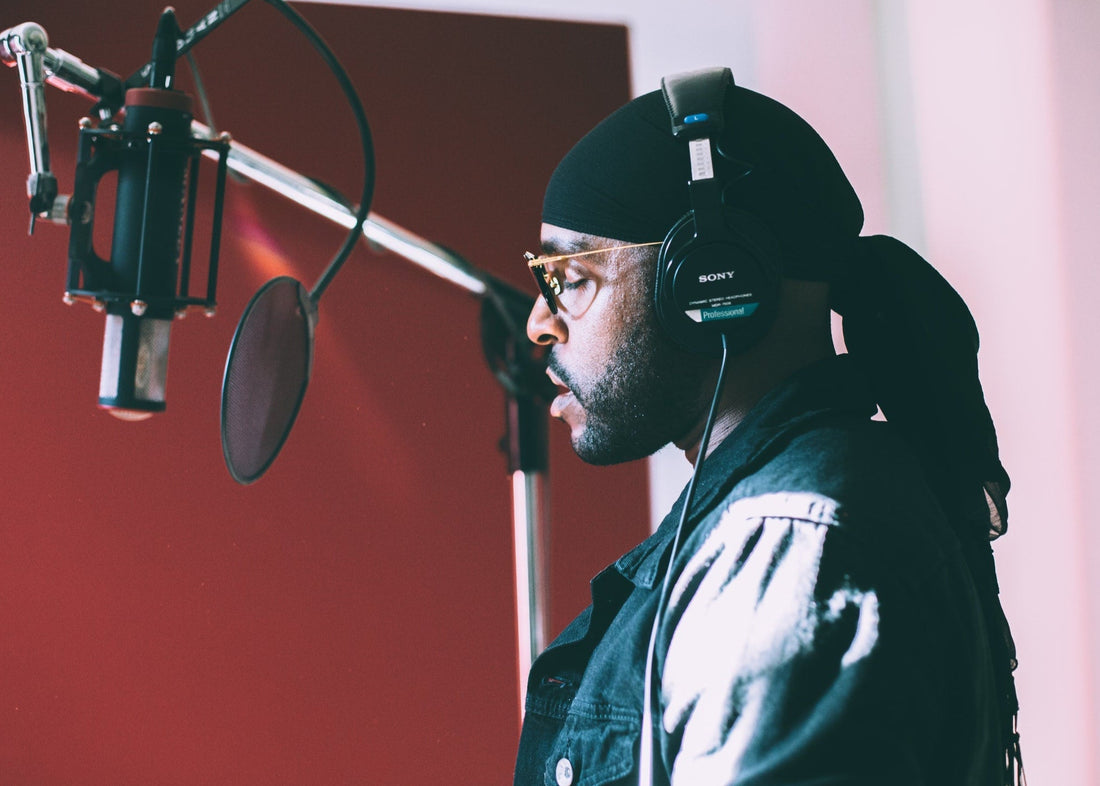
Closed-back headphones are the practical choice for tracking vocals because they help keep the beat in the headphones and out of the mic. You do not need the most expensive pair. You need a pair that seals, gets loud enough without distortion, and lets the vocalist perform confidently.
Tracking headphones are different from mixing headphones
The best tracking headphone is not always the best mixing headphone. Tracking headphones should isolate and survive sessions. Mixing headphones should reveal balance problems. If you can only buy one pair, choose a closed-back model that can do both reasonably well, then check your mix on other systems later.
The mixing with headphones guide covers the listening side. For this article, the priority is recording: keep bleed low, keep the performance comfortable, and avoid forcing the vocalist to fight the monitor mix.
Buy Fourth: The Boring Gear That Saves Takes
Stands, pop filters, mounts, and cables do not get much attention, but they decide whether your setup stays consistent. A cheap stand that droops changes the mic angle between takes. A missing pop filter lets plosives overload the low end. A bad cable can create crackles that sound like plugin distortion later.
Use a stand that holds position
A heavy boom stand or stable desk arm is worth more than a flashy accessory. The mic should stay where you put it. If the vocalist moves and the stand moves too, every take has a different tone. That makes comping harder and preset behavior less predictable.
Use a real pop filter
A pop filter creates space between the mouth and the mic and reduces plosive bursts. That matters because plosives can hit compressors and saturators hard, making the preset sound worse even if the rest of the vocal is clean. Place the pop filter a few inches from the mic, then place the vocalist a few inches from the filter. Adjust from there by voice and mic.
Keep spare cables sooner than you think
A backup XLR cable is not glamorous, but it prevents a session from stopping over a crackle. When a vocal randomly pops or drops out, cables are one of the first things to test. Replacing a cable is cheaper than diagnosing a fake interface problem for two hours.
The Room Is Part of the Gear Stack
The cheapest upgrade is usually moving the mic. Small rooms create reflections that bounce back into the microphone and make vocals sound boxy, hollow, or phasey. You can reduce that before buying acoustic panels.
Start with these moves:
- Record away from bare walls, windows, and hard corners.
- Face the vocalist toward the most absorbent part of the room if possible.
- Use a closet full of clothes, thick curtains, moving blankets, or a mattress as temporary absorption.
- Place a rug under the recording position if the floor is reflective.
- Turn off fans, HVAC, mini-fridges, TVs, and anything else that creates steady noise.
- Move the laptop farther from the mic if the fan ramps up during sessions.
Do not cover every wall with thin foam and assume the room is fixed. Thin foam can reduce fluttery highs, but it does not solve every low-mid room problem. A few thick, strategically placed absorbers or heavy blankets can be more useful for a budget vocal setup than a decorative foam kit.
A Budget Recording Chain That Actually Works
Once the gear is in place, the chain should be simple.
- Mic into interface using an XLR cable.
- Interface into the computer with stable drivers or class-compliant operation.
- Closed-back headphones from the interface headphone output.
- DAW session at 24-bit, with a common sample rate such as 44.1 kHz or 48 kHz.
- Input gain set so loud lines do not clip.
- Light monitoring effects only if the vocalist performs better with them.
- Dry vocal recorded clean so the mix remains flexible.
There is no need to print heavy reverb, aggressive compression, or distortion into the vocal unless that effect is a deliberate performance sound you are sure you want. Most of the time, record clean and monitor with comfort effects. That gives the mix engineer, preset, or later mix session more room to work.
If you like starting from prepared routing, a light template can save time once the gear is handled. The recording templates collection is the natural next step after the setup is stable, not a replacement for clean capture.
Three Realistic Budget Builds
The exact brands can change, but the build logic should stay the same. Spend first on the pieces that protect the recording, not on the pieces that only look impressive.
| Budget level | Best fit | What to prioritize | What to delay |
|---|---|---|---|
| Lowest workable setup | Artist recording demos or first serious releases | Dynamic mic, basic interface, closed-back headphones, pop filter | Monitors, premium mic, plugin bundle |
| Balanced home setup | Artist recording weekly and sending songs out for mixing | Better stand, more reliable headphones, room absorption, spare cable | Outboard preamp, second mic, large interface |
| Release-focused budget studio | Artist finishing regular singles from home | Room treatment, backup mic cable, direct-monitoring workflow, templates | Luxury condenser, analog hardware, decorative upgrades |
Used gear can make these builds cheaper, but buy carefully. A used mic or interface from a reliable seller can be a good move. A mystery cable, broken headphone jack, noisy interface, or loose stand can erase the savings quickly. For first setups, reliability is worth more than squeezing the last few dollars out of the budget.
What to Skip Until Later
The fastest way to waste money is buying gear that does not solve your current bottleneck. These upgrades can be useful later, but they are usually not first purchases for a tight-budget vocal setup.
- Expensive condenser mic before room control: It may capture more room problems, not more polish.
- Studio monitors before treatment: Untreated rooms can mislead balance decisions.
- Outboard preamps: Useful in serious studios, but not the first fix for most bedroom vocals.
- Huge plugin bundles: Plugins cannot repair a clipped, noisy, or badly positioned vocal.
- Reflection filters as the only room treatment: They may help, but they are not a complete room solution.
- Multiple microphones before one good workflow: Learn one mic first so you know what needs improvement.
A focused $400-$700 setup used well often beats a random $1,500 pile of gear used poorly. The difference is not only sound quality. It is repeatability. You want to be able to record a verse today, record the hook tomorrow, and have both takes sound like they came from the same session.
The Pre-Record Checklist
Run this checklist before every real take.
- The room is quiet for at least one full test recording.
- The mic position is marked or easy to repeat.
- The pop filter is placed and the vocalist is not eating the mic.
- The loudest line peaks safely below clipping.
- The headphone mix is loud enough to perform to but not leaking into the mic.
- The beat is not clipping the master bus while recording.
- The session is named clearly and saved before recording starts.
- A short test take has been played back without effects to check noise, plosives, and room tone.
This two-minute habit does more for release-ready vocals than most gear upgrades. It catches the problems that are expensive to fix later.
How to Tell If the Stack Is Good Enough
Your setup is good enough when the raw vocal passes a simple test: the words are clear, the tone is believable, the recording is not distorted, and the mix problems feel solvable. It does not need to sound expensive by itself. It needs to sound stable.
Drop a basic vocal chain on the take. If you only need moderate EQ, normal compression, light de-essing, and tasteful effects, the stack is working. If every take needs aggressive noise reduction, huge EQ cuts, heavy de-clipping, and constant repair, the stack or room is not ready.
If you already have a vocal preset and it keeps sounding wrong, read why your vocal preset sounds bad. A preset problem is often a capture problem wearing a plugin disguise.
Once the source is clean, processing becomes a creative choice instead of a repair job. The best free VST plugins for vocals guide is useful for building a no-cost cleanup and tone chain around a solid recording.
Upgrade Path After the Minimum Stack
Upgrade only after you can name the weakness. If the room sounds boxy, buy or build better absorption. If the interface gets noisy with your mic, consider an inline preamp, a mic with built-in gain, or an interface with more usable gain. If the vocalist cannot perform confidently, improve headphone monitoring. If mixes do not translate, work on listening and references before buying another mic.
| Problem you can name | Likely next upgrade | Do not buy first |
|---|---|---|
| Room tone is obvious | Thicker absorption, better mic placement, quieter room setup | A brighter condenser mic |
| Dynamic mic is too quiet or noisy | Inline preamp, mic with built-in preamp, or cleaner interface gain | More plugins |
| Beat leaks into vocal | Better closed-back headphones or lower monitor level | Noise reduction software as the main fix |
| Plosives ruin takes | Better pop filter and mic angle | A new interface |
| Mixes feel inconsistent | Reference workflow, template, monitoring discipline | A second microphone before solving consistency |
For a broader room and workflow path, the home vocal studio guide goes beyond the minimum stack and covers how the full setup fits together.
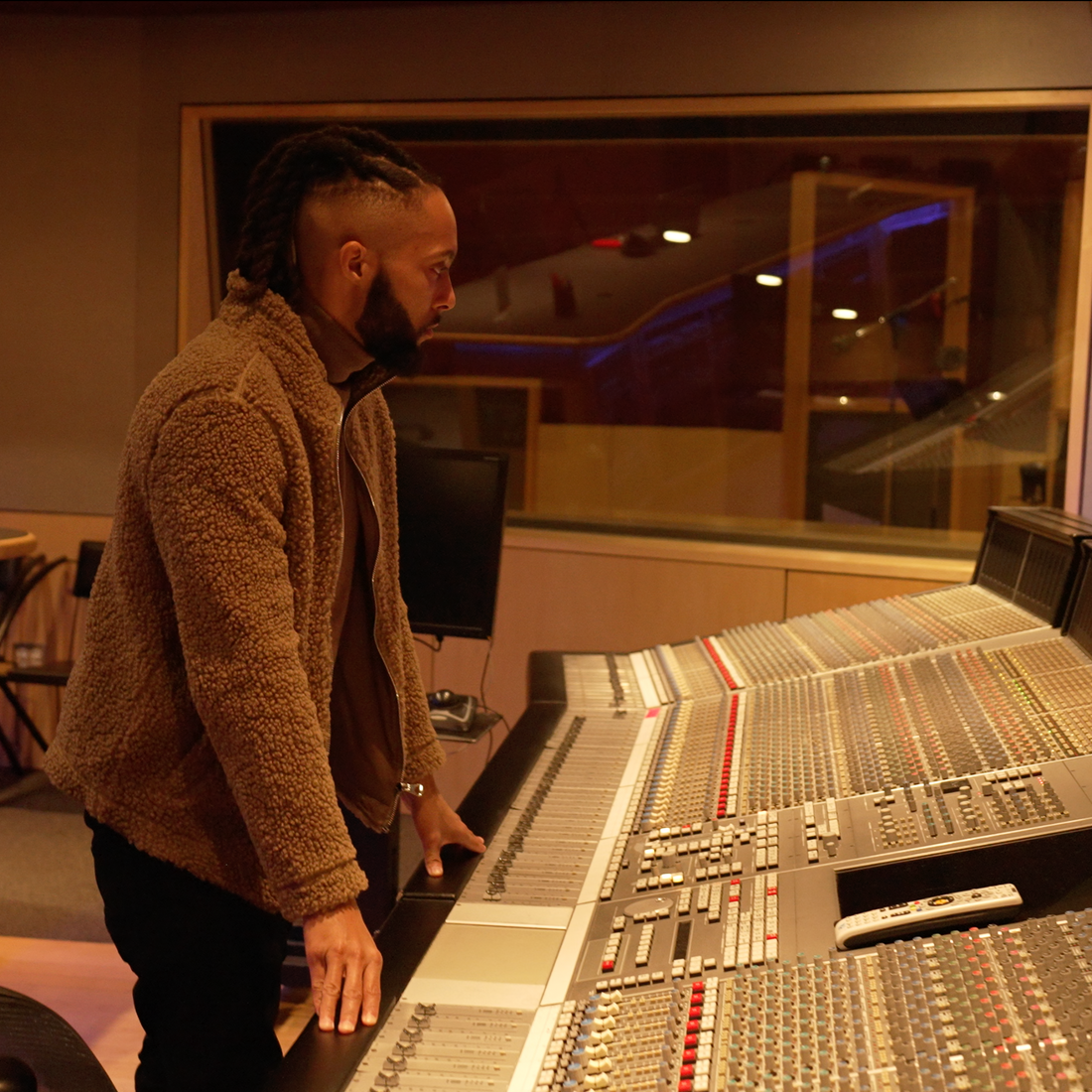
If the recording is clean but you would rather spend your time writing and recording than mixing, compare the cost of more gear against booking mixing services. Often the smarter move is improving the source, then letting a focused mix pass finish the record.
Frequently Asked Questions
Can I record release-ready vocals with a $100 microphone?
Yes, if the room is controlled, the performance is strong, the gain is set correctly, and the mic fits the voice. A $100 dynamic mic in a reasonable room can beat an expensive mic in a reflective, noisy room.
Do I need an audio interface, or can I use a USB mic?
A good USB mic can work for demos, but an XLR mic and interface give you more upgrade flexibility, better monitoring options, and a cleaner path as your setup improves. If you plan to record often, the interface route is usually the better long-term stack.
Should I record at 44.1 kHz or 48 kHz?
Both can work for music. Many home sessions use 44.1 kHz or 48 kHz at 24-bit. The bigger priority is avoiding clipping, keeping the room quiet, and recording consistently. Higher sample rates will not fix bad mic placement or noise.
How close should I be to the microphone?
Start around 4-8 inches away with a pop filter, then adjust by voice and mic. Too close can create plosives and boom. Too far can capture more room. Slightly off-axis placement can reduce harsh plosives while keeping the vocal present.
Do I need acoustic panels before I release music?
Not always. You need a controlled recording position. Thick blankets, smart placement, rugs, curtains, and quiet-room discipline can get you started. Panels become more important when you know the room is the main weakness and you want repeatable results.
What should I upgrade first after the basic setup?
Upgrade the specific problem. If the room is bad, treat the room. If gain is noisy, solve gain. If monitoring is unreliable, fix headphones or workflow. Do not upgrade based on what looks impressive in videos. Upgrade based on what is hurting your recordings.
The Bottom Line
The minimum gear stack for release-ready vocals is simple, but it has to be balanced. Buy a mic that suits your room, an interface with enough clean gain, closed-back headphones, stable support, a pop filter, and enough room control to keep the vocal honest. Then build a repeatable recording habit. Once the source is clean, presets, templates, and professional mixing have something worth enhancing.